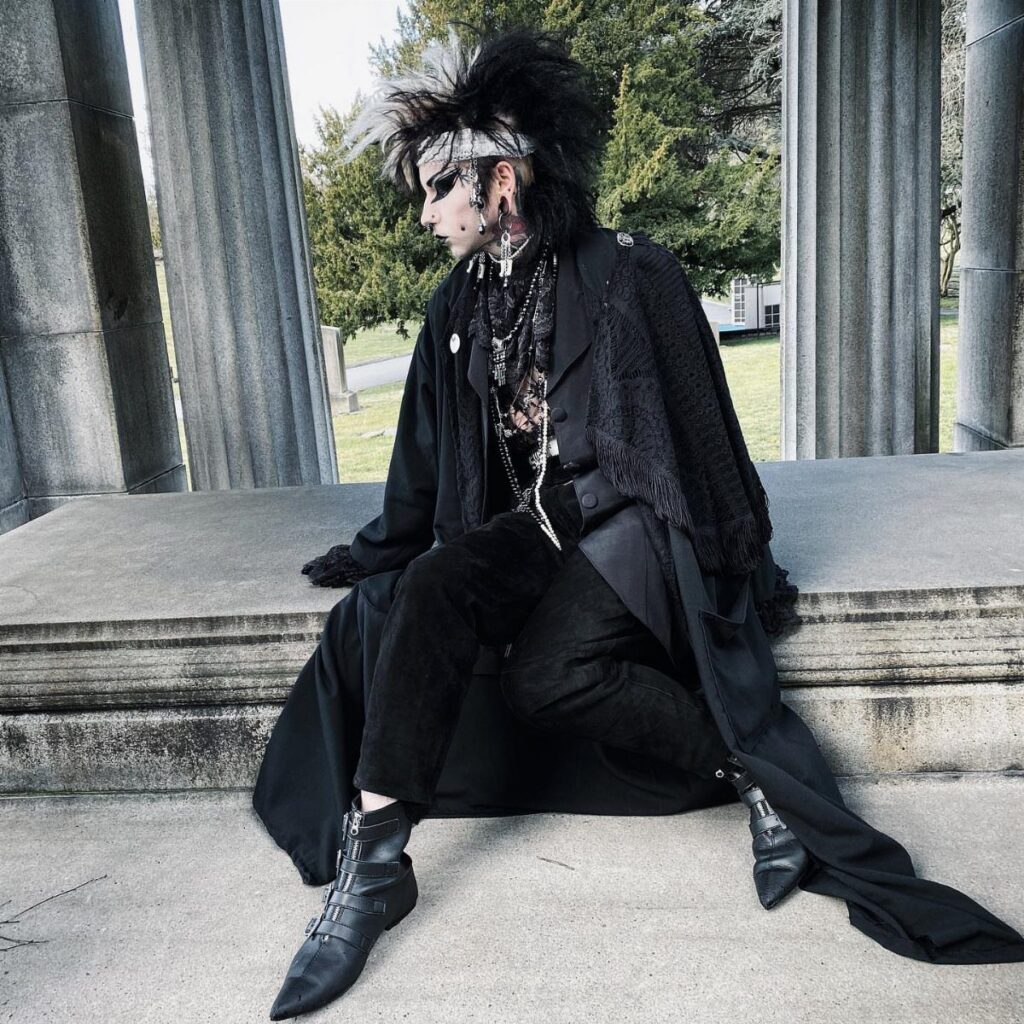
Which 80s goth outfit fits depends on how much of it you want to wear on an ordinary day.
The ideas here run from a full costume of teased black-and-white hair, heavy makeup and black Victorian layers, to a fitted blazer with a collared shirt and tie that could pass at an office, with wide-leg trousers and two or three layered studded belts in between.
If you’d wear it only to one event, go costume; if you want it for a regular Tuesday, build from tailoring or trousers and belts, since the original scene dressed that way as its everyday look.
1. Costume Ideas
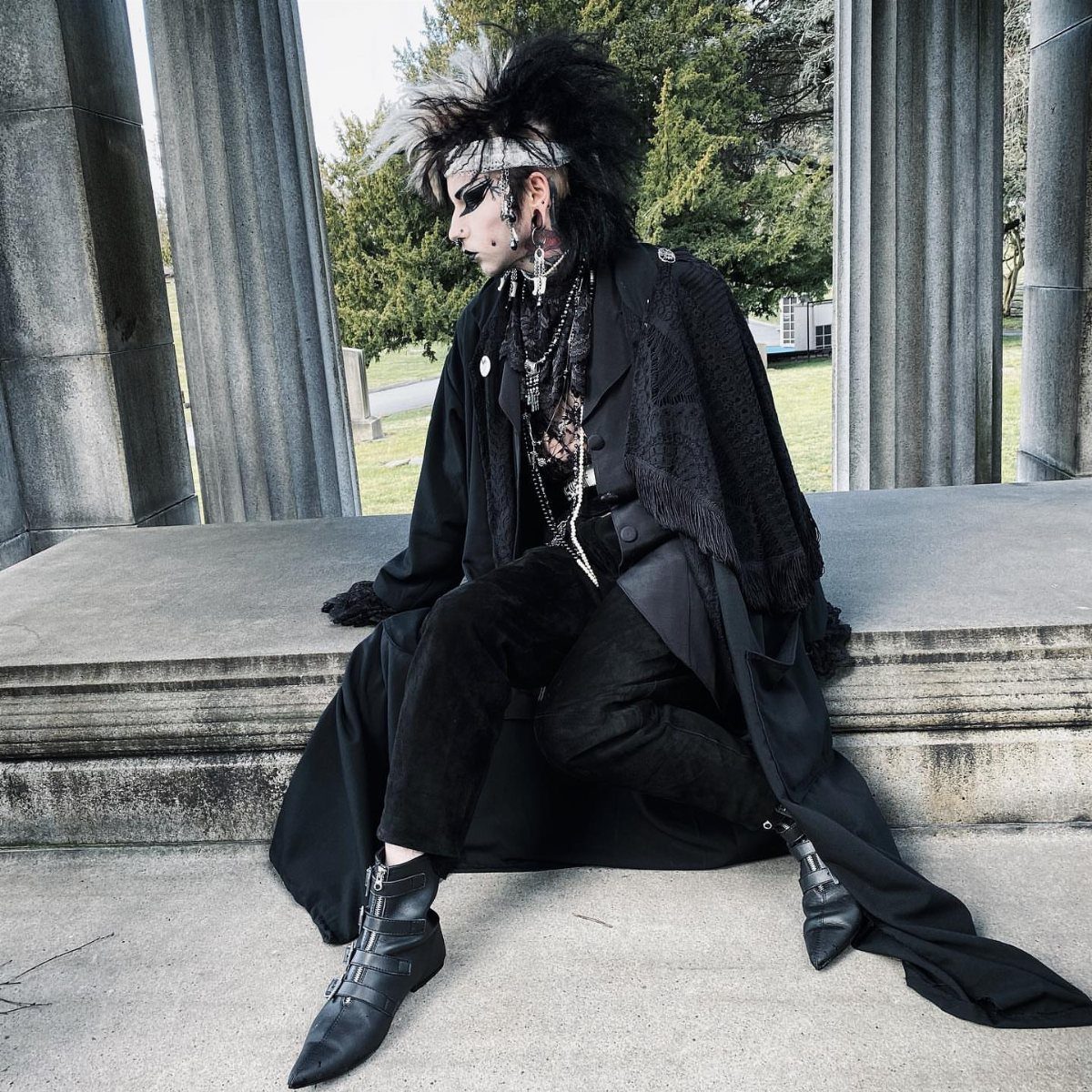
A costume version of 80s goth works best when it commits to one idea: teased black-and-white hair, heavy dramatic makeup, and layers of black Victorian-style clothing.
Hair does most of the talking here, so spend your effort on the teasing and the contrast before anything else.
For a limited budget, thrift black pieces and layer them.
Stack a long skirt or coat over a plain top, then add stone-pale face makeup so the black reads as deliberate. I’d skip packaged costume kits; mixed secondhand layers look closer to the real thing.
2. Post-punk Tailored Studio Look
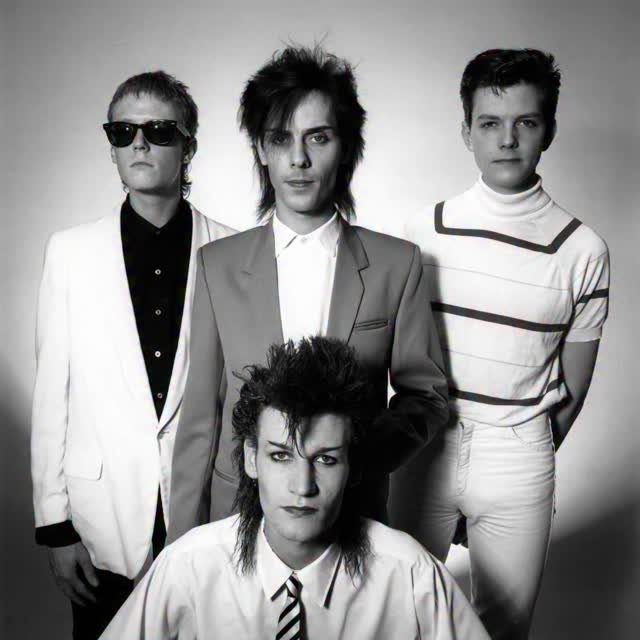
Tailoring is the quiet side of 80s goth, and it suits a reader who would rather wear a blazer than a costume.
Pair a fitted blazer with a collared shirt and tie, or swap in a plain turtleneck, and let dark, textured hair carry the attitude.
I like this version because secondhand blazers are easy to find and cheap to alter.
Keep the palette dark and the shoulders clean. The look falls flat if the jacket is boxy, so check the fit before anything else.
3. Wide-leg Trousers and Layered Belts
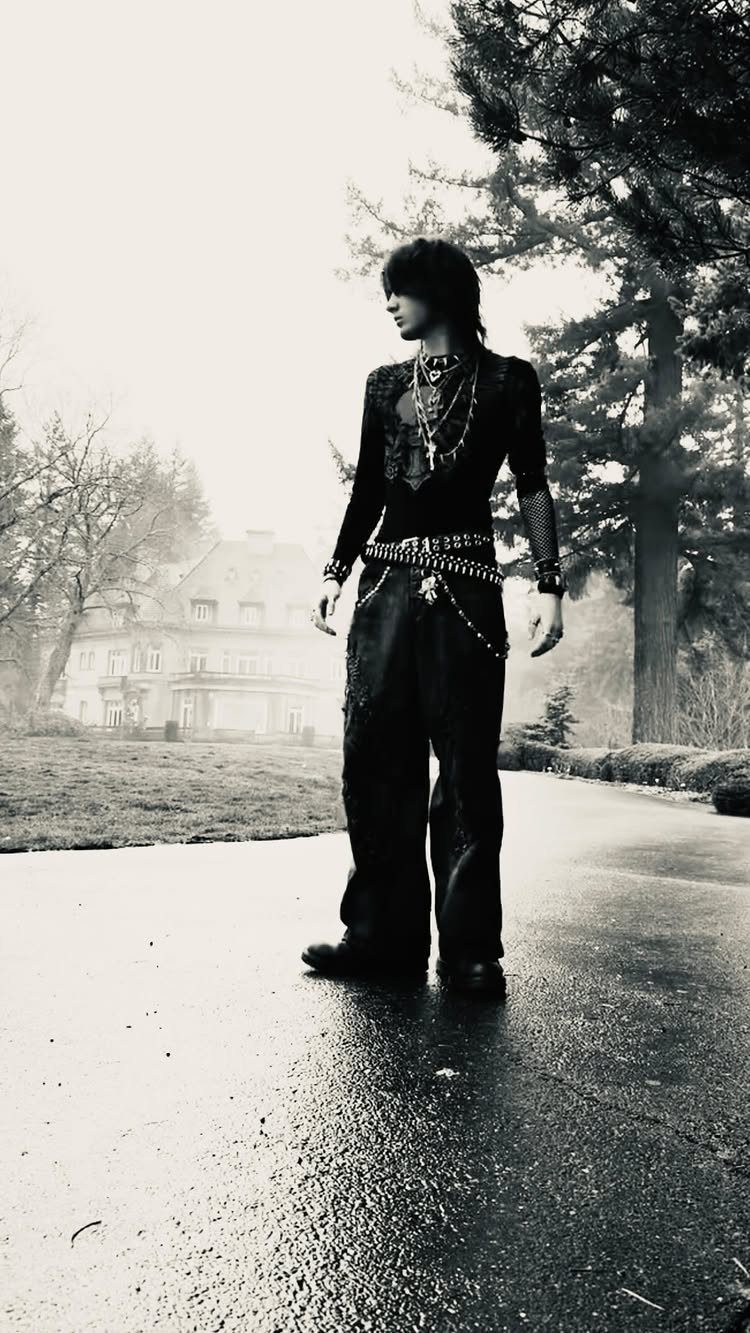
Wide-leg trousers with a fitted long-sleeve top make a clean black silhouette: loose below the waist, close above it. The layered studded belts are where the personality lives.
Wear two or three belts at once, slung at different heights over the waistband, and let them overlap. Thrift stores and army surplus shops are good places to find cheap ones.
Add a necklace or two, but keep everything black so the studs catch the light instead of fighting the outfit. Sizing the trousers long enough to skim the shoe keeps the line unbroken.
Authenticity in Goth Fashion
Authenticity was the whole dress code.
The original scene wore what it put together itself from leather, lace, fishnet and silver, and nobody was matching a template. Someone out dancing on a Tuesday looked like that because it was their regular look, not a costume.
To copy that spirit, build from pieces you already own or can find secondhand, and change them by hand.
Restitch a hem, cut a sleeve, add a few silver pieces. One jacket you altered yourself says more than a full outfit bought in one trip.
Keep the mainstream out of it. The look was a rejection of what everyone else was wearing, so skip anything that reads as a trend pick and choose what you’d wear without an event to go to.
Historical Context of Goth
The look has a birth year: 1979, when Bauhaus released "Bela Lugosi’s Dead."
That origin tells you how to dress it. Start from the music: if you know the bands, you’ll know why the pieces look the way they do, and your choices will hold together better.
It was never mainstream, either. In 1983 the British press tagged the scene "positive punk," a label meant as a put-down, and the people in it mostly shrugged it off.
This look was built to put some people off, so I’d keep it sharp instead of softening it for everyone’s approval.
Back in the 80’s, before the era of Hot Topic, or Cybergoth, The Batcave and Deathrock look was new—and much more commonplace in North American and Europe than it is today.