The looks here range from a plain blazer thrown over a shirt with clean white or gray sneakers, to a trench coat, a head-to-toe brown set, and a full-length white faux fur coat that shows every mark and only suits a guy who likes being noticed.
How much attention you want on a normal day decides which look is yours: a trench or a head-to-toe brown set reads easy, while a faux fur coat needs to be the one loud item and everything around it stays quiet.
1. Shirts, Blazers, and Sneakers
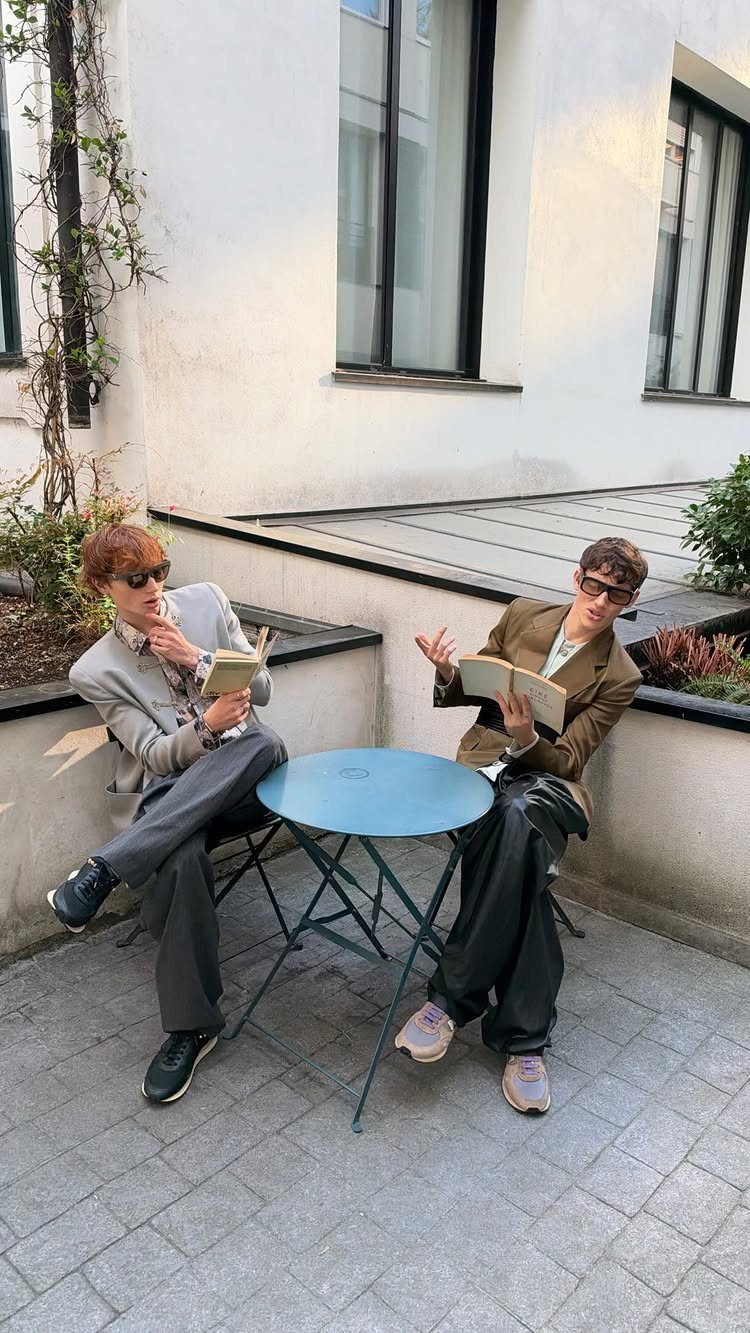
Blazers with sneakers is the easiest way to dress up without looking like you tried.
Low-profile sneakers in a clean white or gray work best here, since the blazer is the only piece with any structure and the shoes shouldn’t compete with it.
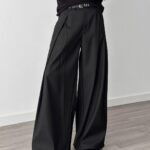
Trousers that fit through the leg matter more than the shoes. A shirt underneath, tucked or loose, finishes it, and sunglasses cost almost nothing to add.
Before buying anything new, I’d reach for a blazer that’s already hanging in your closet.
2. Faux Fur
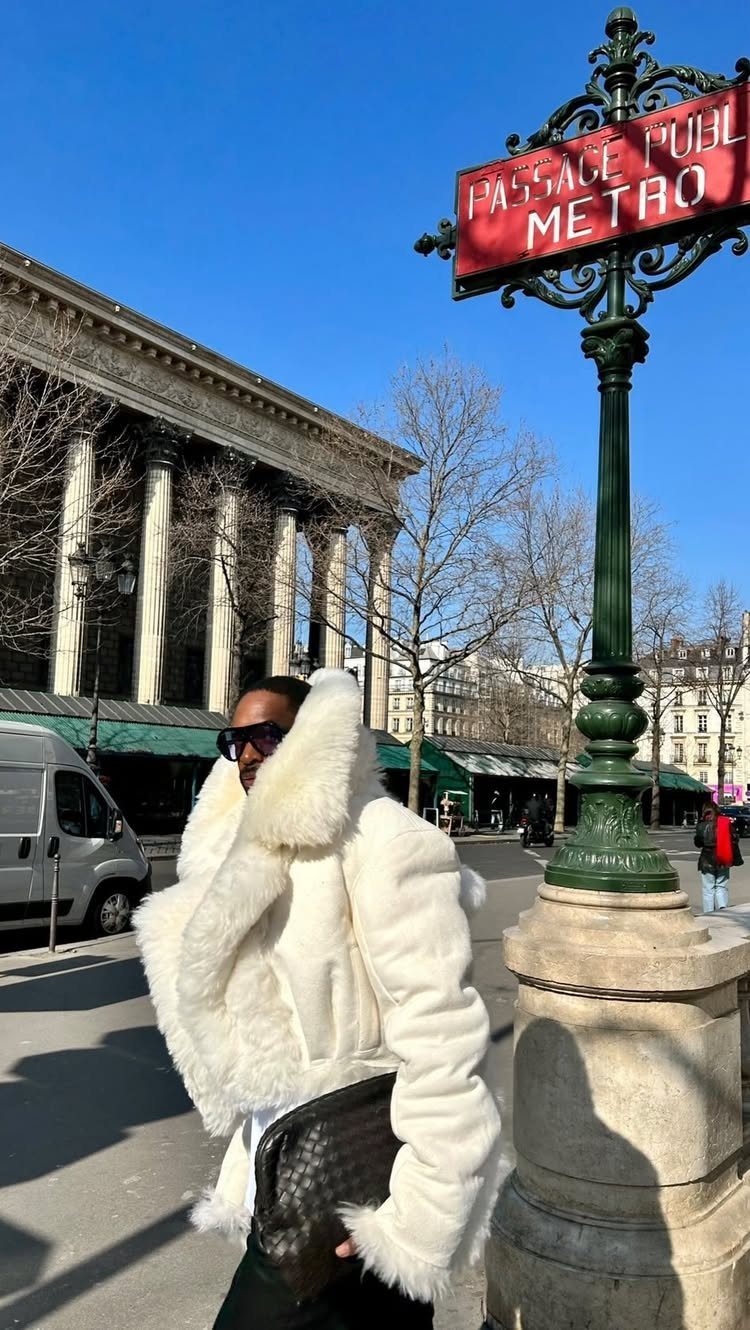
Faux fur adds texture and warmth in one piece, and a white jacket or coat is the loudest way to wear it.
A trimmed collar is the quieter version, and it suits guys who want the look without a full coat.
Keep everything underneath plain: dark trousers, a simple top, sunglasses. The fur is already doing the talking.
I prefer the trimmed jacket for daily wear. A full-length white coat is bold and shows every mark, so it earns its place only if you like being noticed.
3. Trench Coat
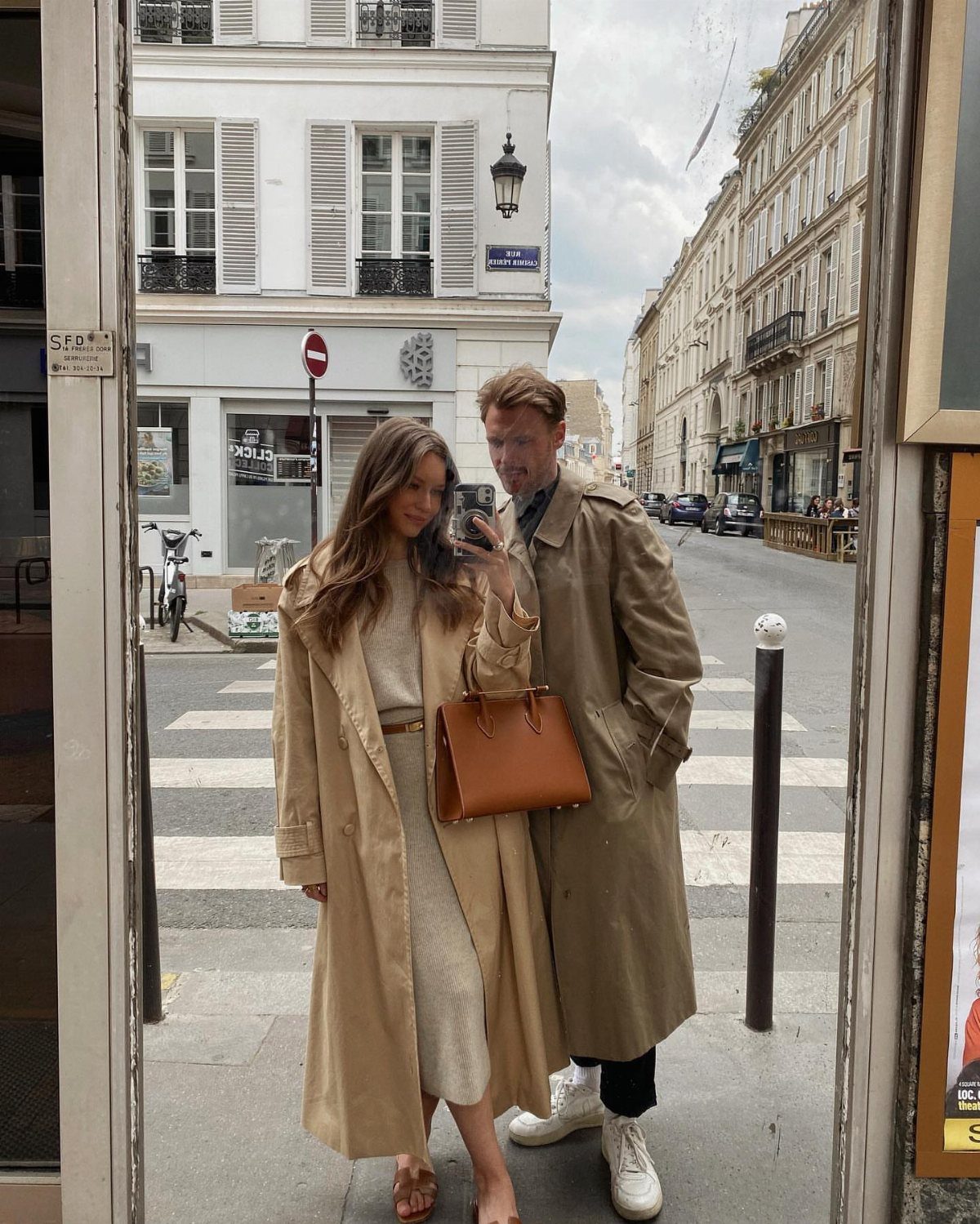
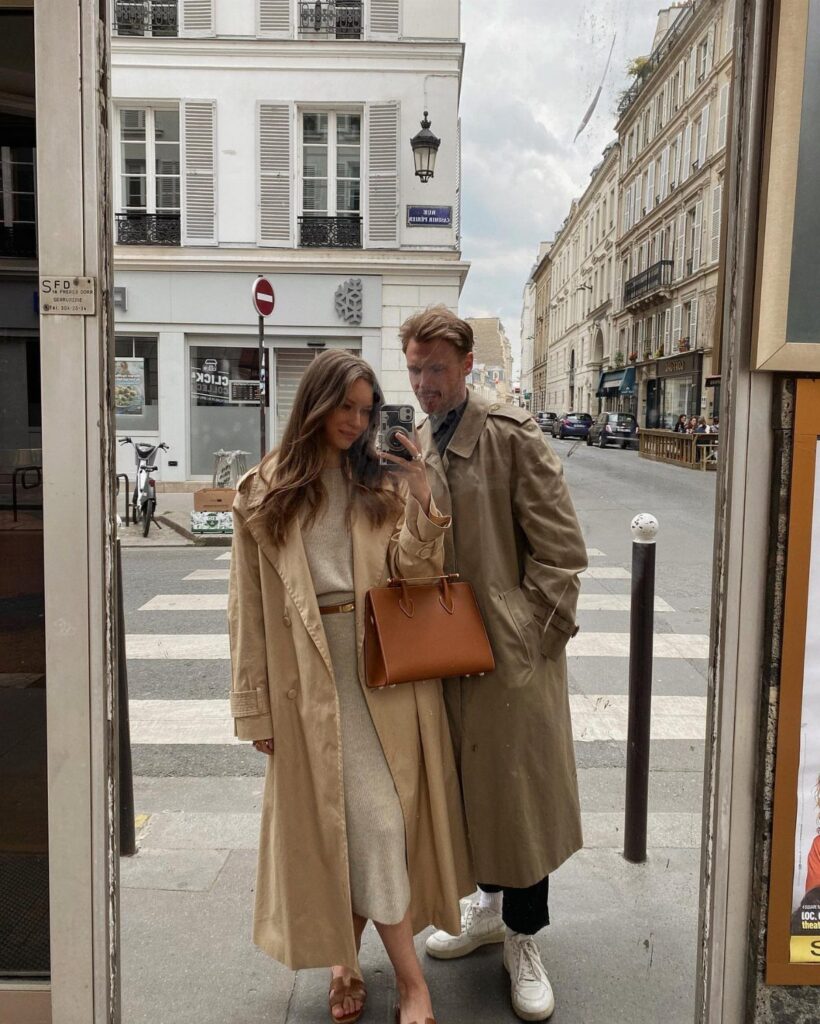
Long beige trench coats are the Paris staple that works on both men and women, which is why a matching pair looks so natural. Choose a tan or beige shade, since it goes over nearly anything.
Length matters here. A coat that falls well below the knee gives you that long, clean line, so check the hem before you buy.
Over jeans and a basic white T-shirt it reads easy, and over a blazer it gets dressier. One coat covers both.
4. Monochromatic Brown Outfit
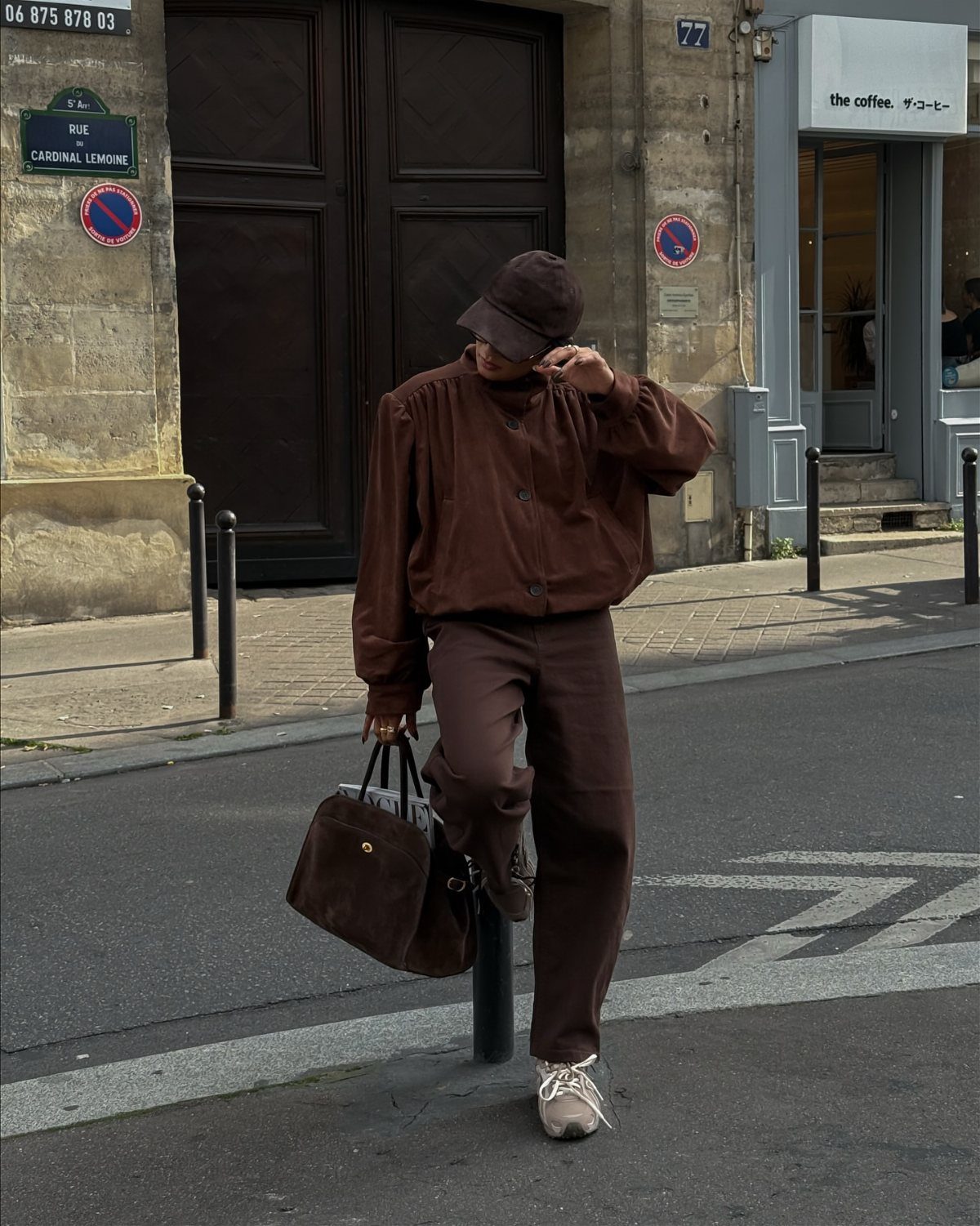
Head-to-toe brown reads as deliberate when every piece sits in the same family: jacket, trousers, cap, bag. Brown is softer than black and easier to wear than most guys expect.
Slight shade differences between pieces help. Mixing a darker jacket with lighter trousers keeps the outfit from looking like a uniform.
A cap and a large bag finish it, and both are cheap to swap in. I’d start with the trousers and jacket, then match the accessories to them.
Fashion as Self-Expression
Street style comes from people on the sidewalk, not from studios or runway shows. That is why it works as a model for your own wardrobe: nobody is handing you a uniform.
Start with one piece you already like wearing and build around it. Plain pieces around it let your own taste show through, and that is where an outfit starts to look like yours instead of a copy.
Trends are optional. A look you repeat because it feels right will read as more personal than one you bought because it was everywhere.
Casual Vs. Formal
Paris asks outfits to do 2 jobs. You walk a lot, and you may go from a café to a meeting without going home, so the clothes have to hold up in both settings.
Build that range from sturdy pieces: a blazer, a leather jacket, denim, a simple tee. None of them is fragile, and each can move toward dressy or relaxed depending on what sits next to it.
Stick to two or three colors that sit well together, then pick one piece, a coat or a bold boot, to be the loud part of the outfit. If the jacket is the loud item, everything else stays quiet.
Pick stable footwear and layers you can shed. Dressing for movement beats dressing for a photo.
Cultural Influences
Paris style pulls from many places now, and you can borrow the same way. Paris has its own flavor, but most of the pieces are already sold at US retailers, so you can build the look without booking a flight.
Neighborhoods like Le Marais and Saint-Germain-des-Prés are often used as shorthand for street-level cues. Whether or not you live near anything like them, the lesson carries over: keep the palette tight and let one piece say something.
The rules are flexible. Aim for an outfit that hangs together on its own terms; a costume copied from one decade or one scene usually looks forced.
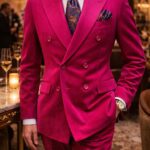
From tights and layers to makeup and accessories, shades of burgundy are all over Paris’ streets right now. Perhaps this hue’s popularity is due to its universally flattering nature.
— Elle
Frequently Asked Questions
What is Paris street style?
Paris street style is what people actually wear on the sidewalks of the city, not what shows up on a runway or in a studio shoot.
Nobody hands you a uniform, so the look comes from individual taste, built on plain, sturdy pieces like a blazer, a leather jacket, denim and a simple tee.
How can I achieve Parisian style?
Begin with a piece you already reach for, then add quiet items around it.