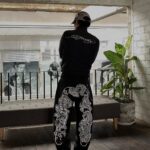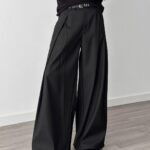
The list runs from thrifted and altered pieces to a long coat over a band tee, and the real difference between those outfits is the morning effort they ask for.
Deathrock and the teased-hair leather look both need hair and makeup time, while the vest and the long coat put the work into the clothes.
If you want something you can wear daily, pick by how many minutes you’ll give your hair before you leave the house, since the teased look takes far more than a coat and a band tee.
1. Thrifted and Altered Clothing
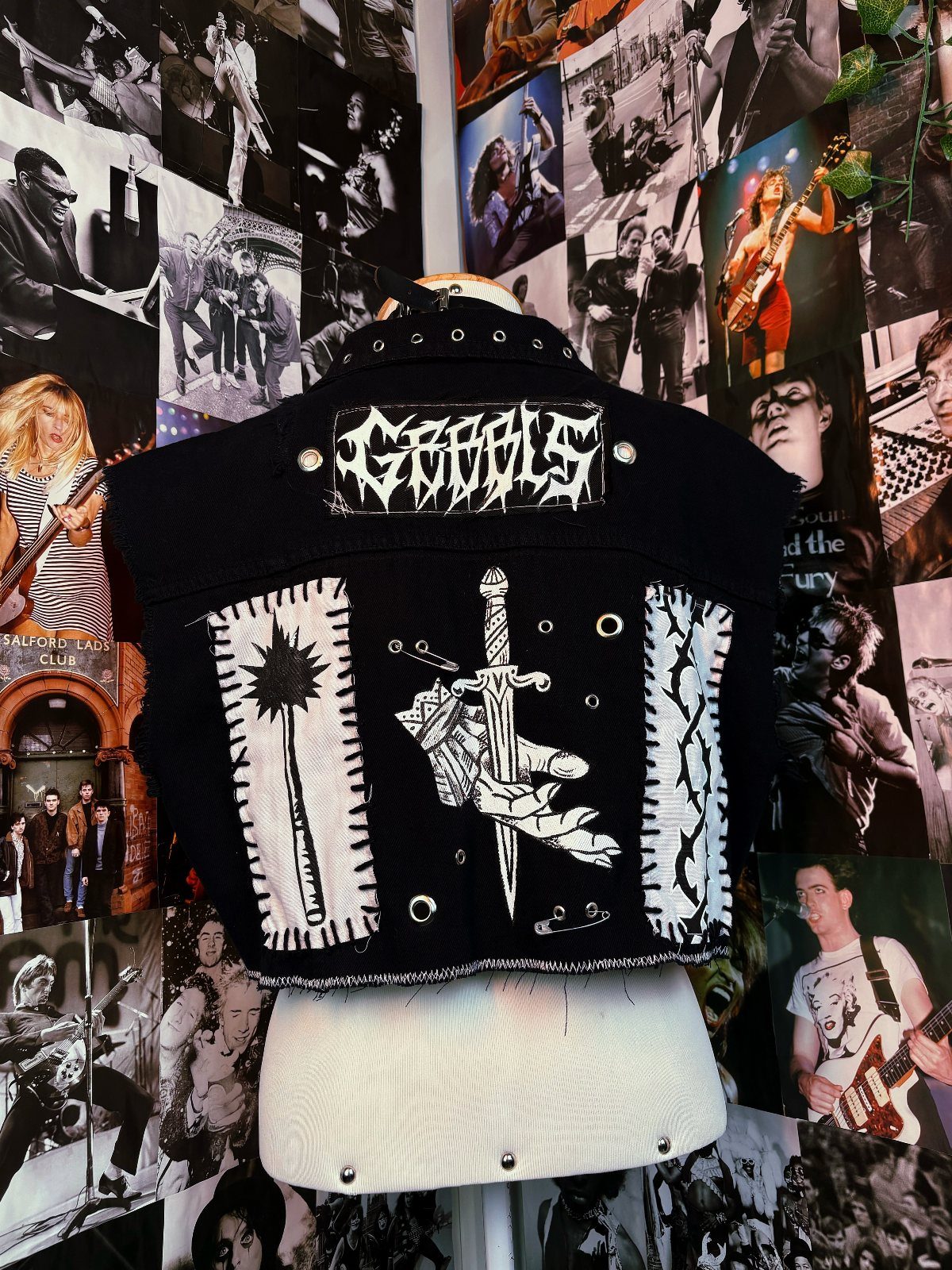
A black denim vest with the sleeves cut off is the easiest place to start, because the alteration is the whole look.
Patches, safety pins and grommets all go on after the vest is yours, so a plain thrifted one works fine.
Keep the palette tight: a black base, white patches, and one repeated motif like daggers, so the pile of detail reads as a plan.
Pin the patches in place first and check the spacing before you sew, since crowding one panel looks messy.
Start with a few patches and add more as the jacket tells you where it wants them.
2. Deathrock Fashion
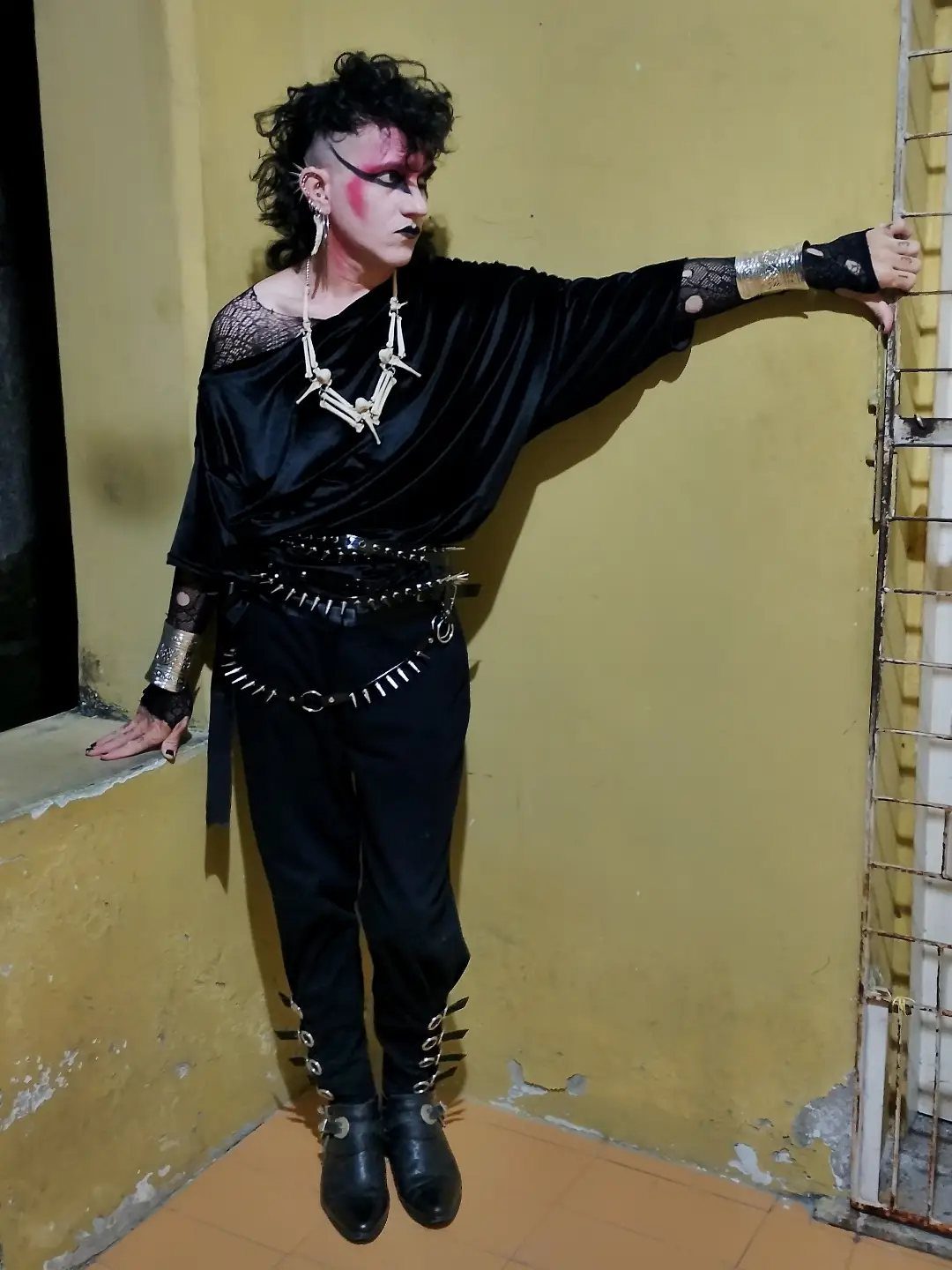
Deathrock reads as all black with hardware: spiked belts, a bone necklace, pointed buckle boots. Teased dark hair and heavy stage makeup finish it, and they matter as much as the clothes do.
Choose a single statement piece, such as the necklace or the belt, and let everything else stay plain black so nothing fights it. Buckle boots anchor the outfit, so spend there first.
This look takes effort every morning. Hair and makeup are the time cost, not the clothes.
3. Teased Hair and Leather Outfit
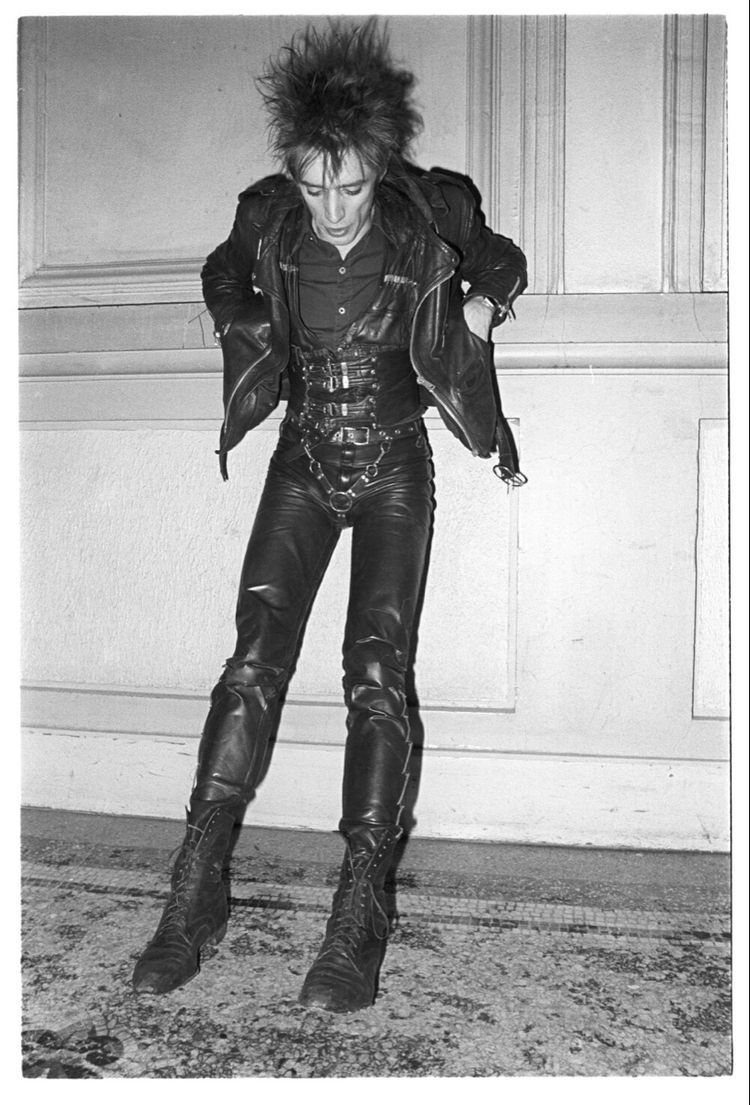
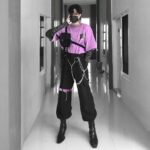
Voluminous teased hair, a leather jacket, a laced corset, tight leather pants and lace-up boots: this outfit works because every piece is black and every piece has texture. Leather on leather needs the corset’s lacing to break up the surface.
I would start with the jacket and pants, then add the corset once the silhouette feels right. Tight pants plus a fitted corset suit a slender frame best; on a broader build, keep the jacket cut a little roomier.
Teased hair does the final work, so give it height.
4. Long Coat with Band Tee
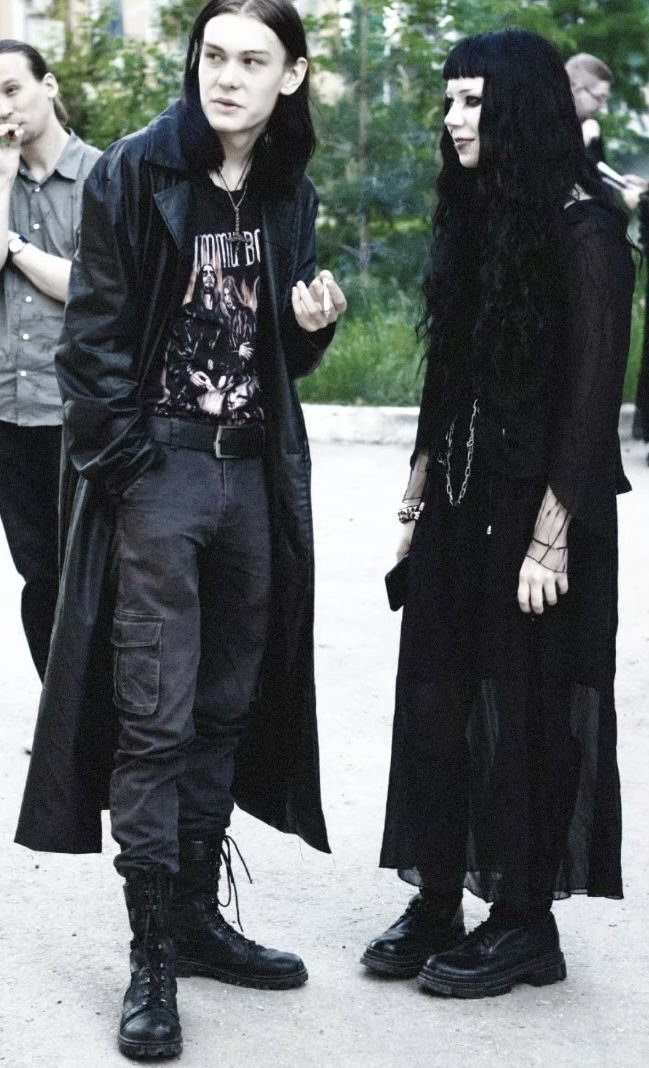
Long black coats do the heavy lifting here. Worn open, a floor-skimming trench or leather coat frames a band tee, trousers or cargo pants, and combat boots without any fuss.
For daily wear, this is the version I would pick first. Every piece stays black or close to it, and the band tee carries the personality.
Keep the coat’s hem clear of your boots when you walk, and choose a tee that fits close so the coat doesn’t swallow it.
Understanding Trad Goth
Trad goth started with the music, and most people in the scene will tell you the clothes come second.
The style grew out of the 1980s and took classic 80s dress in a spookier, edgier direction. Black lipstick and fishnet were part of that, along with Victorian touches, corsetry and trench coats.
Knowing the records changes how you put things together. A look built from a favorite band reads as personal, while a look built from a shopping list reads as a costume.
Pick one band first and let its look guide your choices.
Trad Goth Vs. Mall Goth
Both styles sit under the goth umbrella, but they come from different places.
Originally a put-down, "mall goth" described a look from the late 1990s and early 2000s that borrowed from nu metal, industrial, pop punk and skate culture, with Hot Topic as the supplier.
Trad goth grew out of 1980s post-punk and the bands that made it, so the look runs darker and sticks closer to the original.
Mall goth is not a lesser version. For many young people it was the first door into alternative music and fashion, and that is a fair way in.
If you want the trad route, pull from the older bands and the darker, more classic pieces. If you like the mall look, enjoy it and don’t apologize for it.
Fashion Evolution
Early 80s goth was more varied than the all-black image that took hold in the 90s. Bands developed different looks, and color was not off limits.
That gives you real freedom. Goth began as a music scene rather than a dress code, so a trad goth can wear a lot of different things.
By the 80s it had split into a few branches: Batcave and classic trad goth, deathrock (a bit more punk), and the soft, romantic, bohemian looks that now go by woodland goth and ethereal goth.
If black on black feels too rigid, look at those softer branches. They give you a way to stay true to the roots without wearing the same uniform as everyone else.
A typical outfit will combine elements of fetish wear with Victorian and sometimes steampunk fashions, including tight pants, velvet sportcoats, top hats, cravats, corsets, ankle length skirts, lace petticoats, and the frilly pirate shirts previously popularised by the New Romantics of the 1980s.
Frequently Asked Questions
What do traditional goths wear?
Mostly black: a band tee, black trousers or cargo pants, a leather jacket or a long coat, and combat or buckle boots.
Fishnet, corsetry, Victorian touches and black lipstick come from the 1980s roots of the style. Pointed winklepickers or thick-soled creepers finish the outfit, but the teased, backcombed hair does just as much work as anything you wear.
What is the difference between goth and trad goth?
Trad goth is the original branch of goth, rooted in 1980s post-punk and the bands that made it, such as Bauhaus, The Cure and Siouxsie.
Newer branches sit under the same label now, and mall goth is the clearest case: it pulled from nu metal, industrial and pop punk around 1998–2003. The trad look runs darker and stays closer to the old records.