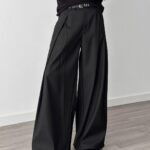
Baggy jeans range from a white tee and sneakers to a black blazer and loafers, and the pair in your closet decides which look fits.
Loud jeans, like the alphabet-patched pair, need a plain top, while a plain wash can carry a graphic tee or sweatshirt.
Frame comes second: on a smaller build, a cropped jacket or a straighter thigh keeps the denim from swallowing you, and one half of the outfit should always run slimmer or more structured than the other.
1. Graphic Tee with Baggy Jeans
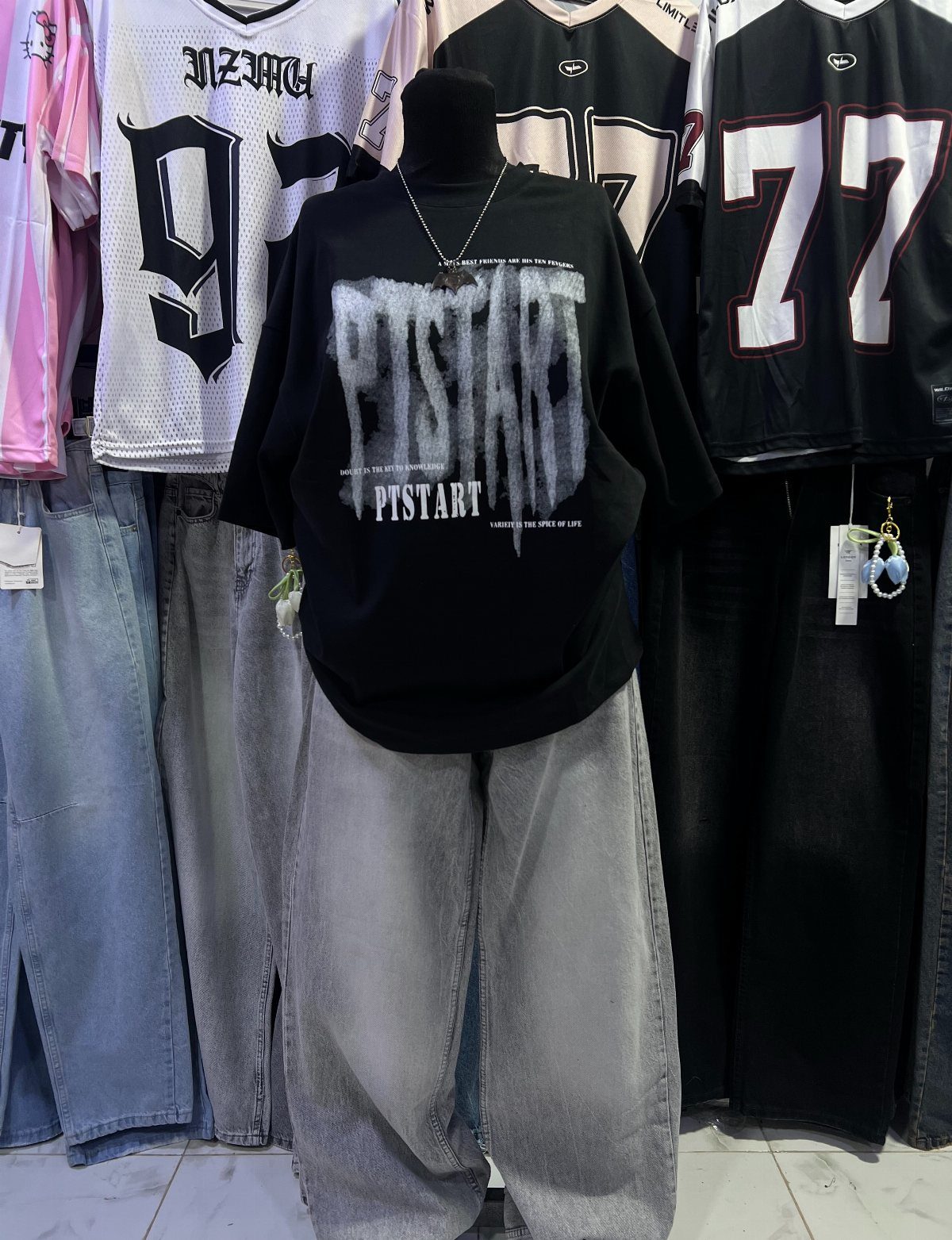
A graphic tee is the easiest piece to put over wide denim, and a black one over light gray jeans gives the outfit a clear top and bottom.
Keep the tee boxy but shorter and lighter in weight, so the jeans carry most of the volume and the top stays the slimmer half.
A loud print already carries the outfit, so I pair it with white or black sneakers and skip the extra layers. If the jeans pool at the ankle, size down a half inch of length or cuff once.
2. Layering with Jackets
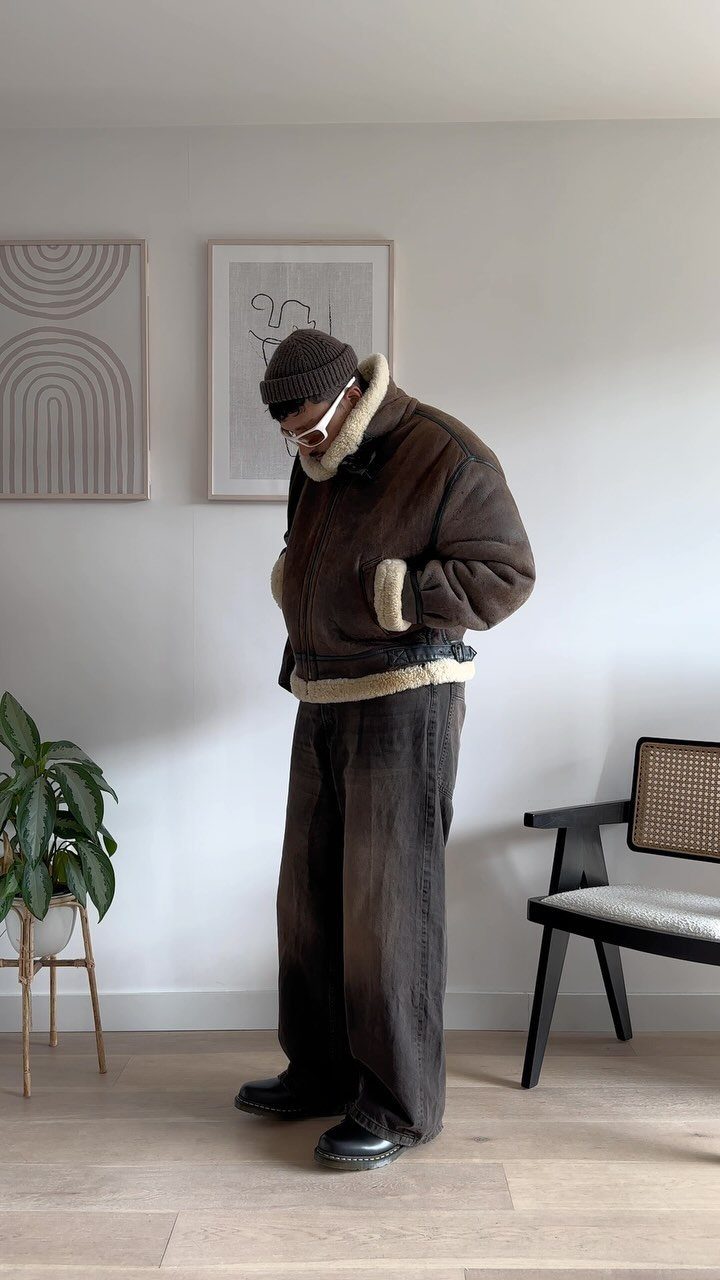
Baggy jeans have no shape of their own, so the jacket supplies it. A shearling aviator in brown sits at the hip and gives the wide leg something to balance against.
I like keeping the palette in one family, brown on brown here, with a beanie and sunglasses as the only accents.
Bulk is the cost: a heavy jacket over wide legs can swallow a smaller frame, so I’d choose a cropped jacket or pants that run straighter through the thigh.
3. Baggy Jeans with Blazer
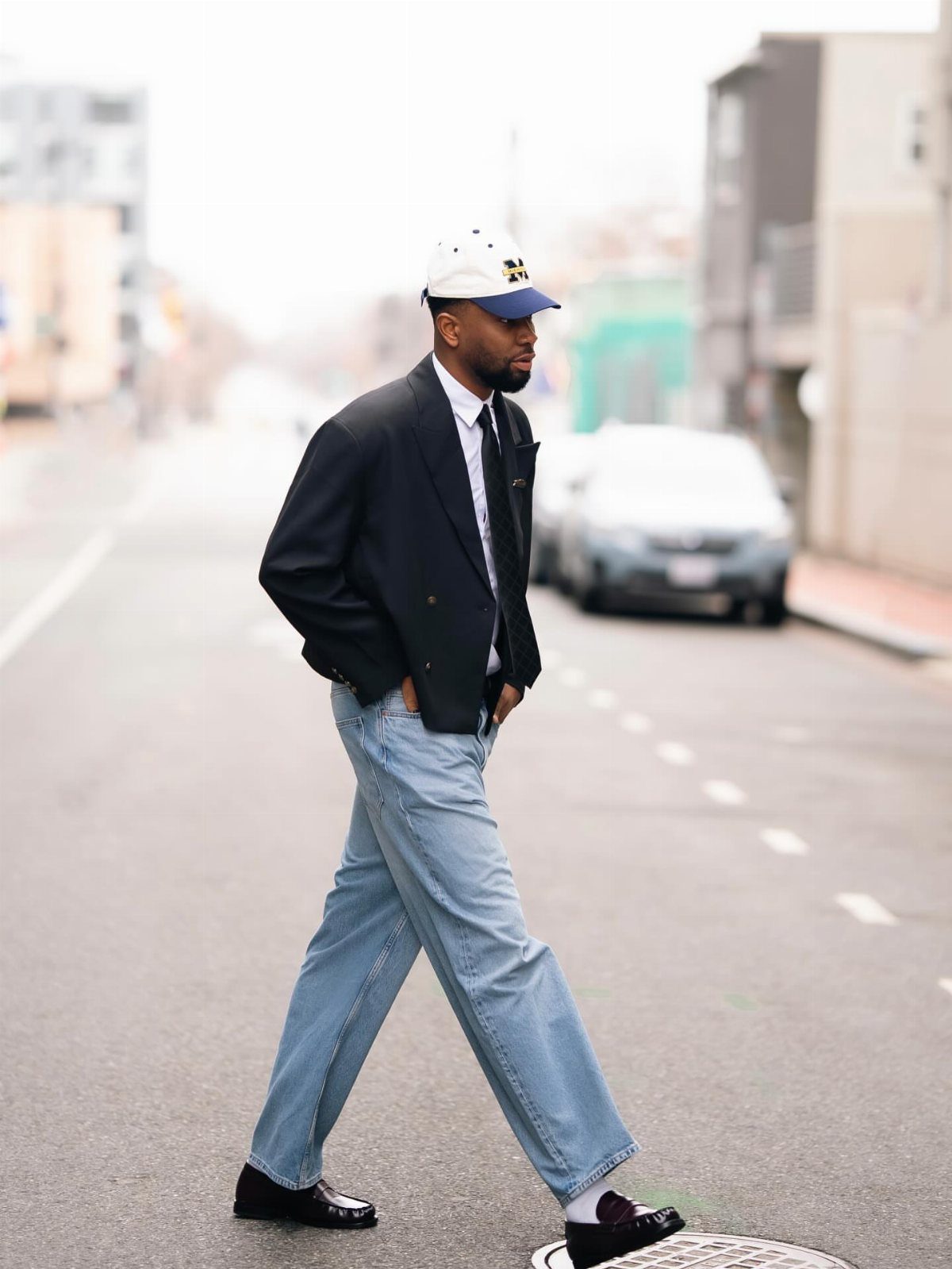
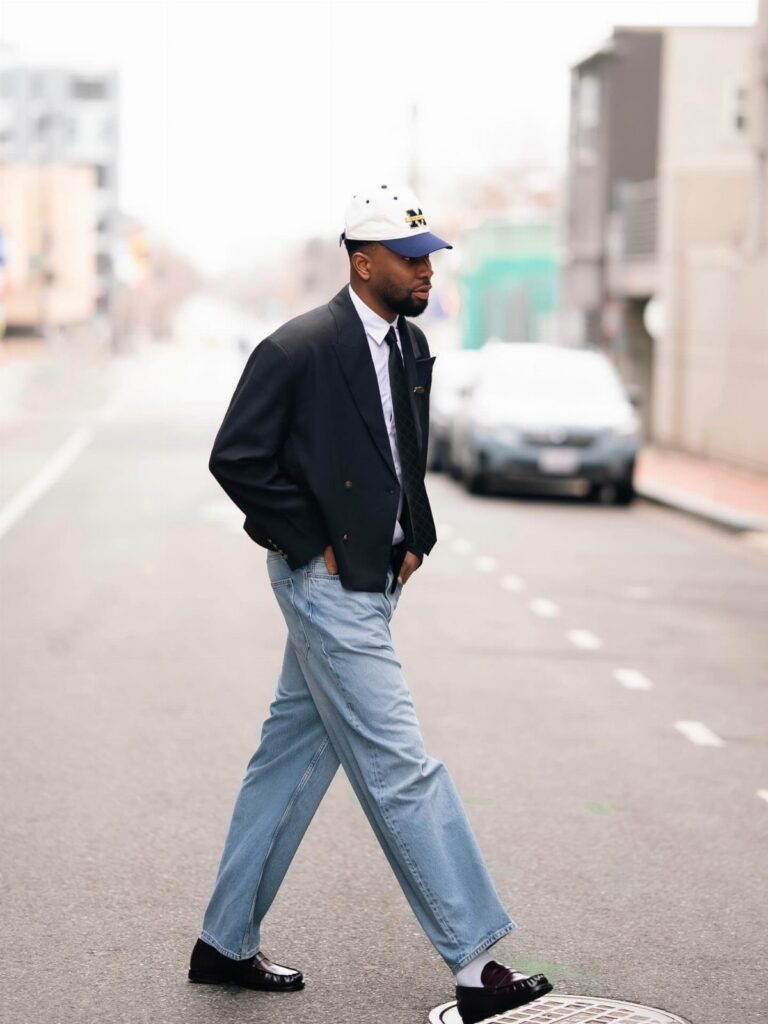
Pair a black blazer with light-wash wide-leg jeans and the outfit splits the difference between office and street. The dark jacket anchors the faded denim, and a white shirt with a dark tie keeps the top half sharp.
Black loafers finish it better than sneakers, and a baseball cap pushes it back toward casual.
I’d pick this over a full suit for a normal workday. Skip the tie if your office is relaxed.
4. Loafers with Baggy Jeans
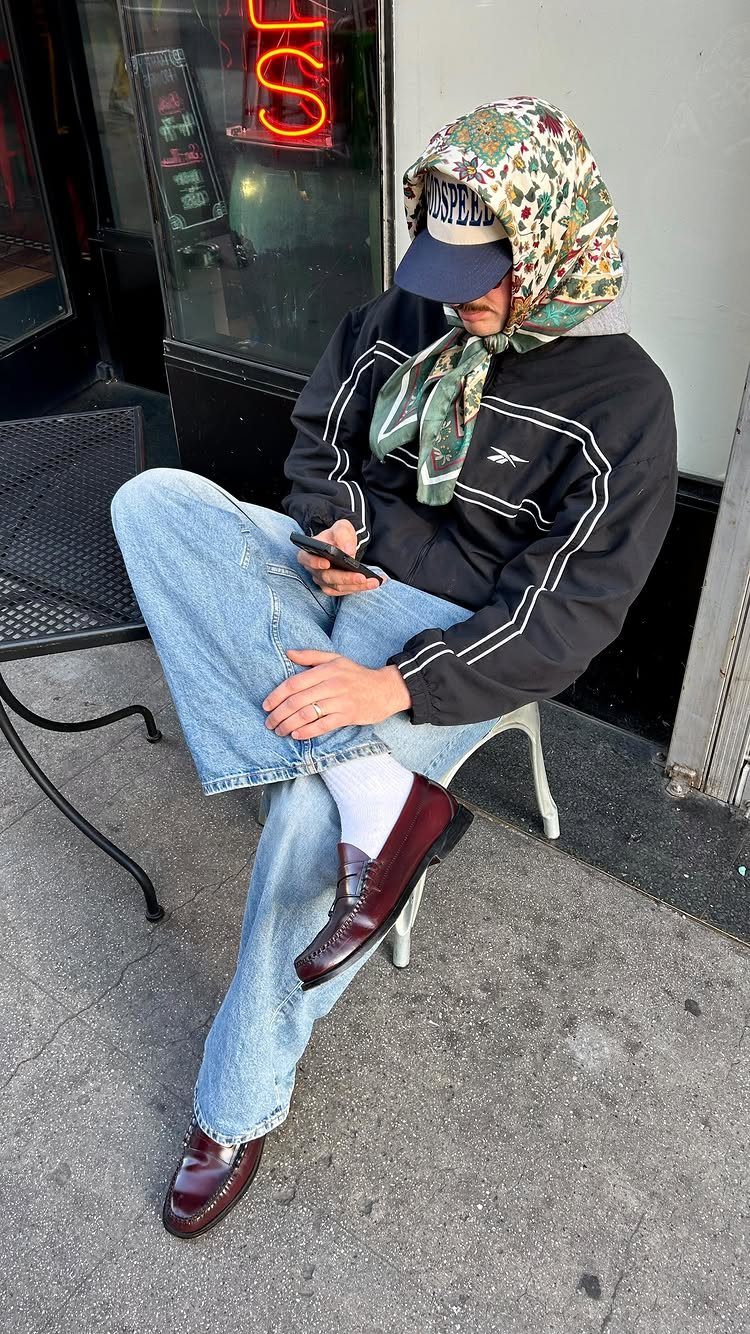
Loafers are the unexpected shoe here, and they work because they show a clean sliver of leather under a wide hem. Burgundy leather against light blue denim adds color without a loud print.
Hem the jeans so the cuff just grazes the top of the shoe.
Any longer and the loafer disappears. A windbreaker works here, or a plain white or gray T-shirt; either way the top should stay loose and low-key beside the loafers.
5. Graphic Sweatshirt and Baggy Jeans
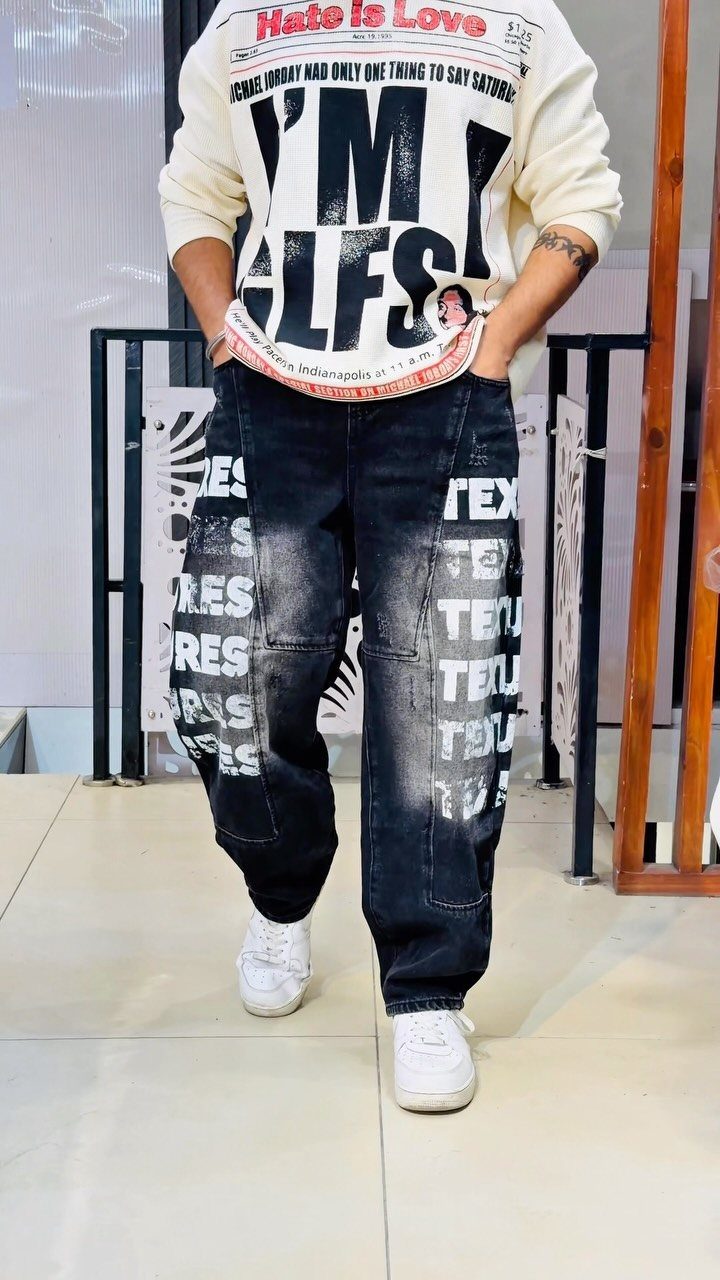
White on black is the whole logic: a white graphic sweatshirt over black baggy denim that carries its own printed lettering.
2 busy pieces can clash, so let the sweatshirt take the larger statement and keep the jean text tone-on-tone with it.
A pair of white sneakers echoes the sweatshirt’s color and finishes the look. If the jeans are already loud, I’d choose a sweatshirt with a smaller print.
6. Oversized Long Sleeve and Baggy Jeans
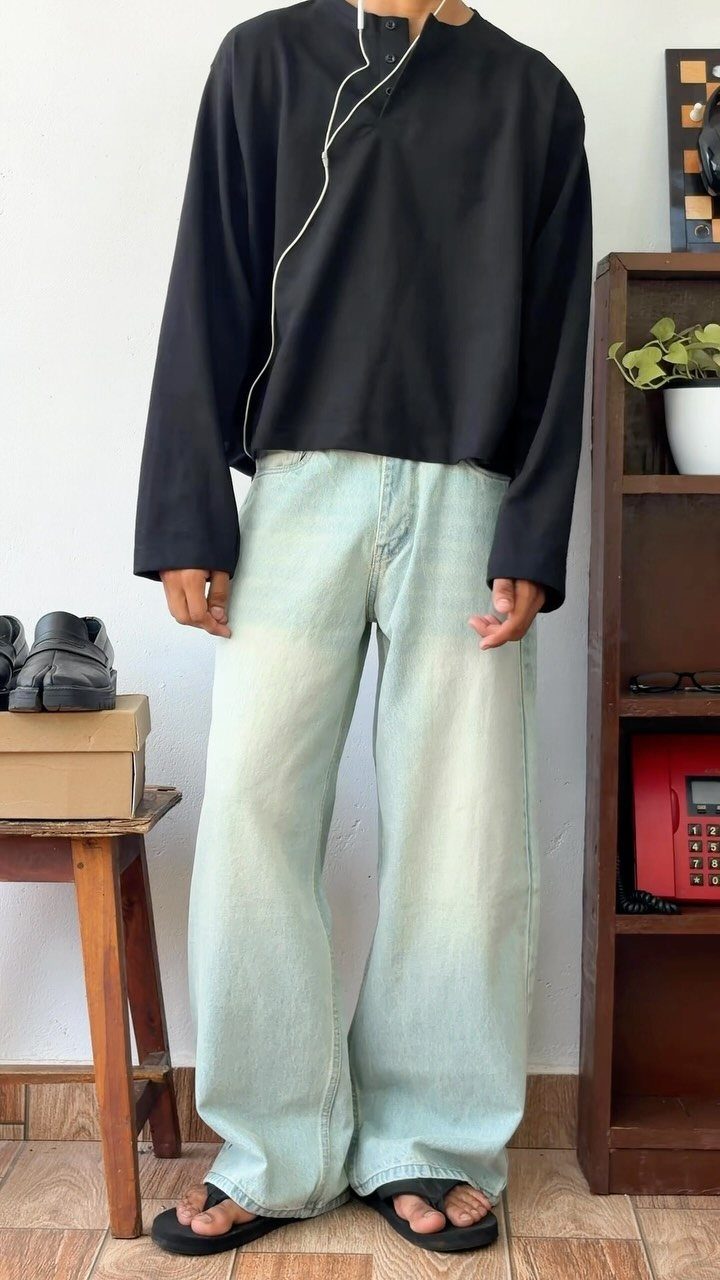
Oversized black long sleeves over very wide light-wash jeans is a study in contrast: dark and loose on top, pale and loose below. Nothing is tucked, so the shirt hem should fall past the belt line without covering the pockets.
Flip-flops keep it easy at home or on a warm day; I’d swap in sneakers anywhere you’re going out. Keep the shirt plain so the denim wash stays the focus.
7. Plaid Button-Down and Baggy Jeans
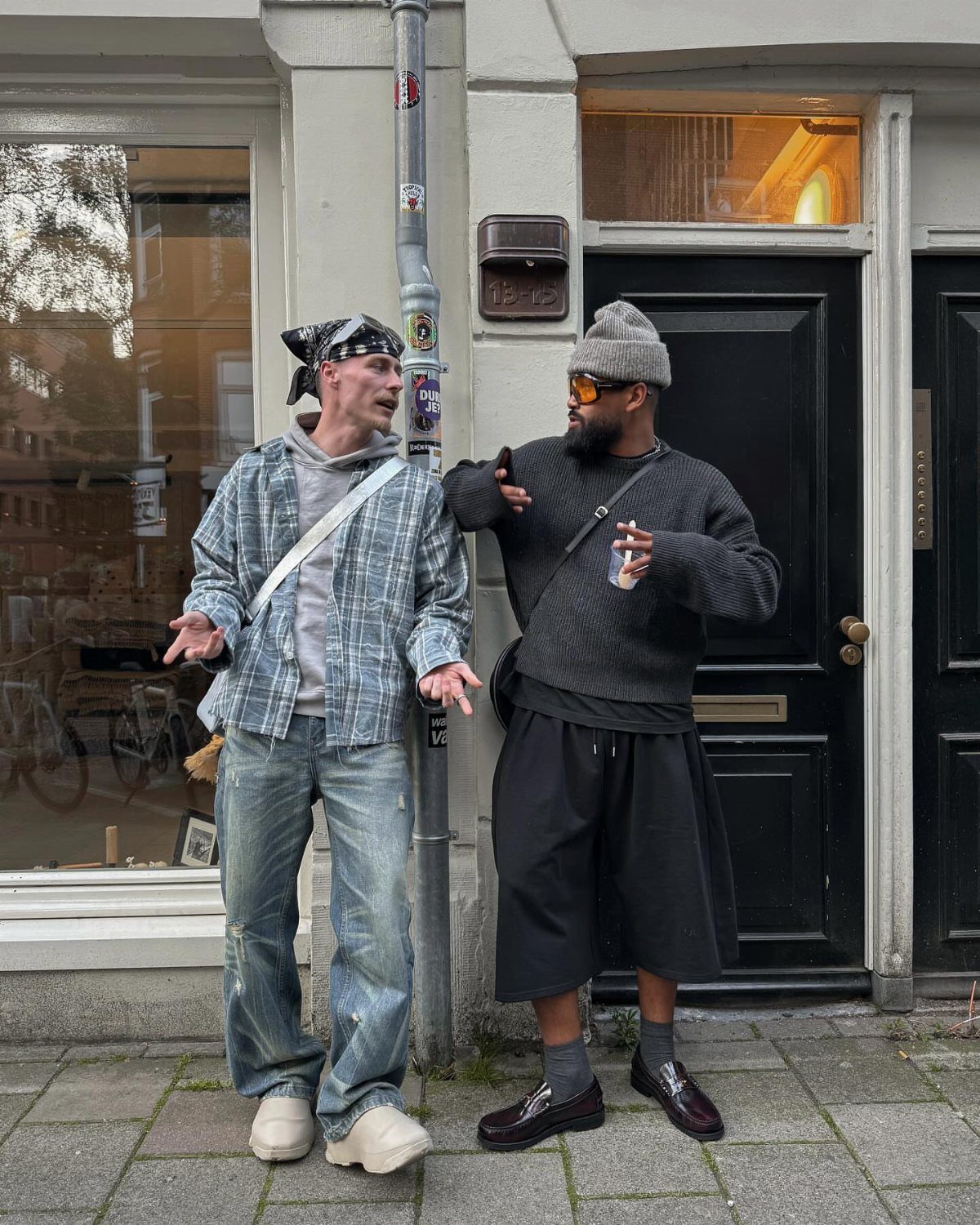
Blue plaid reads as a shirt you could wear anywhere, which is why it sits so well on light-wash baggy jeans. Both pieces are casual, and the 2 blues stay in the same family without matching.
Wear it open or buttoned, and let the hem hang loose.
White sneakers keep the bottom half clean, so the plaid is the only pattern. I’d keep the shirt a little roomy to match the jeans; a snug one beside that much denim looks mismatched.
8. Statement Alphabet Patched Baggy Jeans
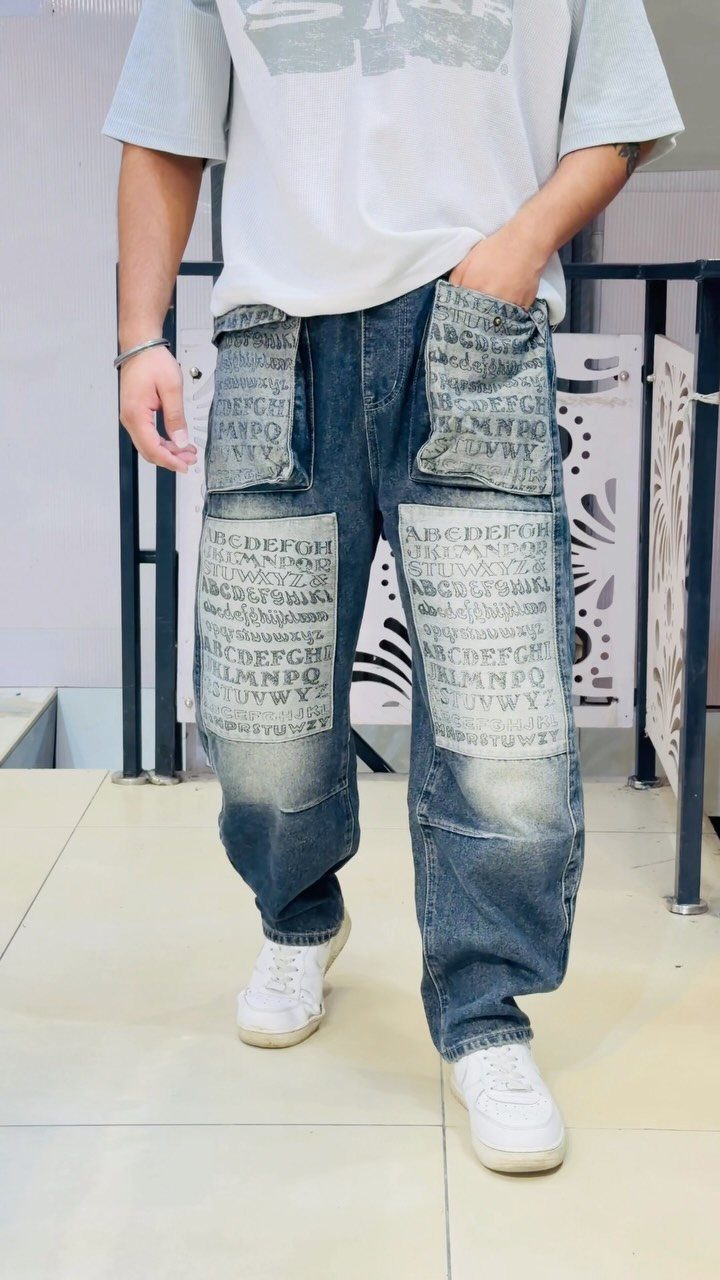
Patches do the talking on these jeans, so everything else should go quiet. Large alphabet letters across baggy blue denim are already a full statement, and a white tee with white sneakers gives them room.
Keep the top quiet, since loud patches on the jeans fight with anything busy above them.
If you want the print up top as well, keep it small. The cost is range: jeans this loud are hard to repeat in a week, so treat them as the one piece the outfit is built around.
Versatility of Baggy Jeans
Baggy jeans cover more ground than their reputation suggests. A pair of white ones works for a walk in the park or a coffee run, and colorful tops or plain tees are all they need.
For a more polished day, the same cut can handle a dinner or a weekend brunch. Pick a dark, clean pair and keep the rest of the outfit tidy.
Baggy jeans are cut to sit low on the hips, and worn that way with a white tank they stay comfortable even in July heat.
Balancing Proportions
Wide legs need something to push against, so give the top half more structure. A slim or tailored T-shirt, button-down or pullover keeps you from drowning in fabric.
If you want a looser top, add structure through outerwear instead, like a checked blazer layered over a printed tee. The mismatch looks deliberate, and retro-style trainers fit right in.
Run a simple test before you leave: if both halves look equally big, one of them needs to go slimmer.
Fashion Trends
Baggy jeans used to belong to skaters and ’90s boy bands. Baggy jeans have shown up on some of the best-dressed people at fashion weeks in Copenhagen and New York.
The appeal is comfort. For everyday wear, I’d pick a low-rise, wide-leg cut: it’s the easiest denim to live in, and it works for most occasions.
Black is the safest pick if you want one pair that goes with nearly any top. It reads as urban without trying hard.
There’s no denying: Baggy jeans remain the coolest and most comfortable denim you can own. They have a fit similar to that of a wide-leg trouser, but also the effortless appeal of a blue jean.
— Vogue
Frequently Asked Questions
What are baggy jeans?
A pair of baggy jeans is cut with room to spare: more fabric in the seat and thighs, and a wide opening at the hem.
They run roomier than typical relaxed-fit denim. They are also not the same as wide-leg jeans: baggy pants are loose at the hips and waist too, while wide-leg describes the leg shape.
How to style baggy jeans?
Wide legs need a counterweight, so I put the structure up top with a boxy jacket, a heavier tee or a thick knit.
A slim or tailored tee, button-down or pullover works, or a looser top paired with structured outerwear such as a checked blazer.
One last check in the mirror: if the top and bottom look the same size, slim one of them down.
Are baggy jeans still in style?
Yes.
The cut began on skate ramps and boy-band stages in the 90s, and today you’ll spot it on front-row regulars in Copenhagen and New York. Comfort is the main appeal.
Why does Gen Z like baggy pants?
Comfort is the biggest reason, and the cut is easy to wear.
Some of the appeal is lineage: 1990s hip hop put the silhouette on the map, and skaters and streetwear brands never let it go. It’s a clear break from the fitted, tailored styles of recent years.