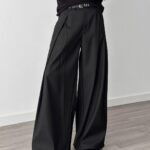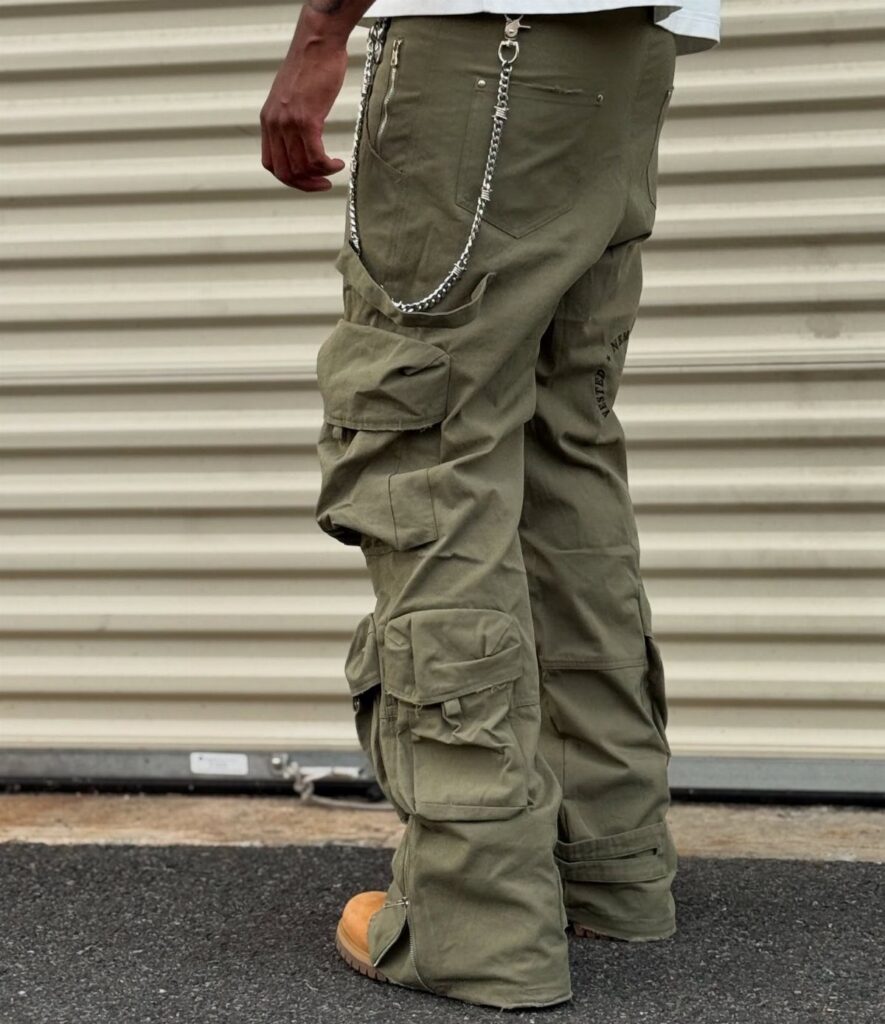
Cargo pants run from relaxed cuts to baggy pairs, with multi pocket utility styles and pockets set above the knee in between, and how much volume you already carry decides which one fits.
On a shorter frame, the extra fabric in a baggy pair can swallow you, so pockets set above the knee or a relaxed cut are the safer picks.
1. Relaxed Cargo Pants
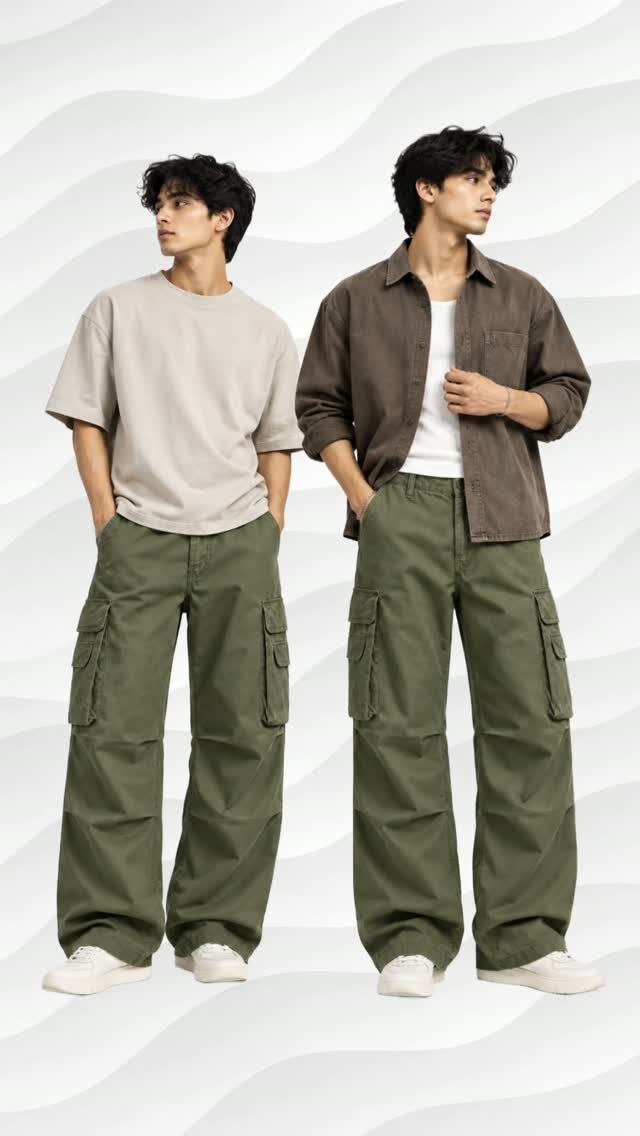
Relaxed cargo pants sit between slim and baggy: room through the thigh, a straight leg, and pockets that lie flat instead of bulging. That balance is why I’d pick them first if you wear cargos rarely.
Keep the top simple.
A fitted tee or an open button-down over an undershirt works because the pants already add volume. Olive is the easiest color to start with.
2. Multi Pocket Utility Cargo Pants
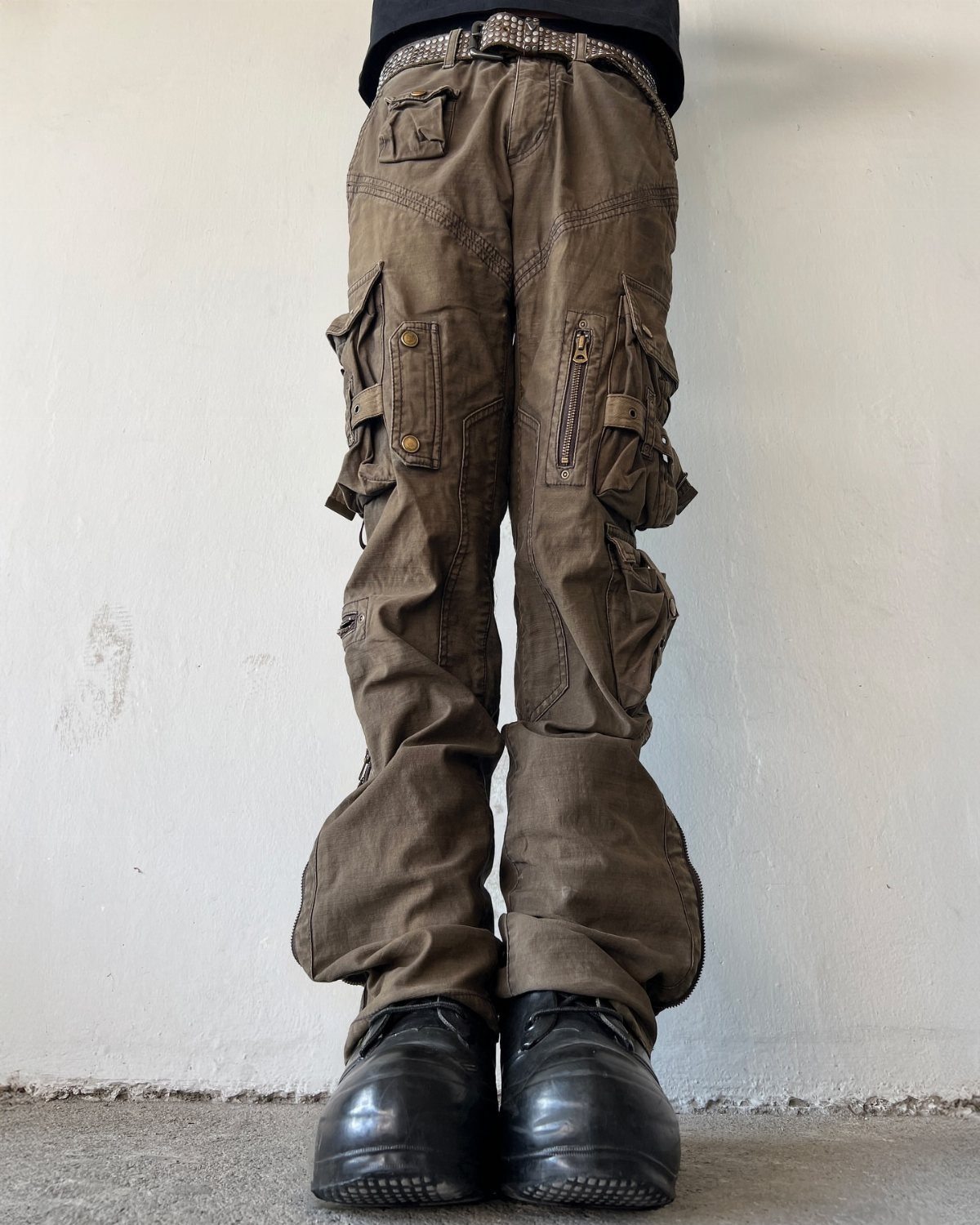
Structured brown utility pants with multiple flap pockets and contrast stitching already carry plenty of detail, so everything else you wear with them should stay quiet.
Pair them with a plain cotton T-shirt in black, white or gray and dark shoes, and that covers it.
Flared legs change the balance.
They need a heavier shoe at the hem, like the chunky black leather pair here, or the opening swallows your foot. I’d skip extra bulk up top.
3. Baggy Cargo Pants
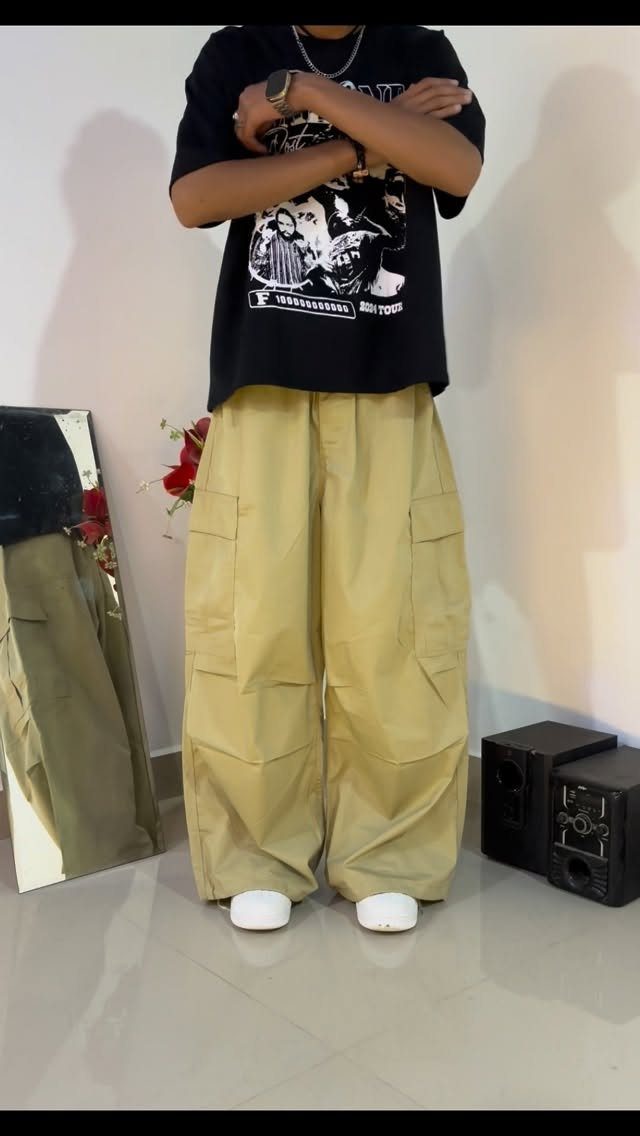
Baggy cargos lean hard into streetwear, and the fit rule is simple: the pants carry the volume, and the shoes anchor it. A wide beige leg breaks over white sneakers without dragging, which keeps the line clean.
An oversized graphic tee matches the mood. I prefer it slightly boxy rather than long, so the waistband stays visible and you don’t disappear into fabric.
Baggy cargos cost you in bulk, and the extra fabric can swallow a shorter frame. You’ll need a belt, and hem length matters more than usual.
4. Cargo Pockets Above the Knee
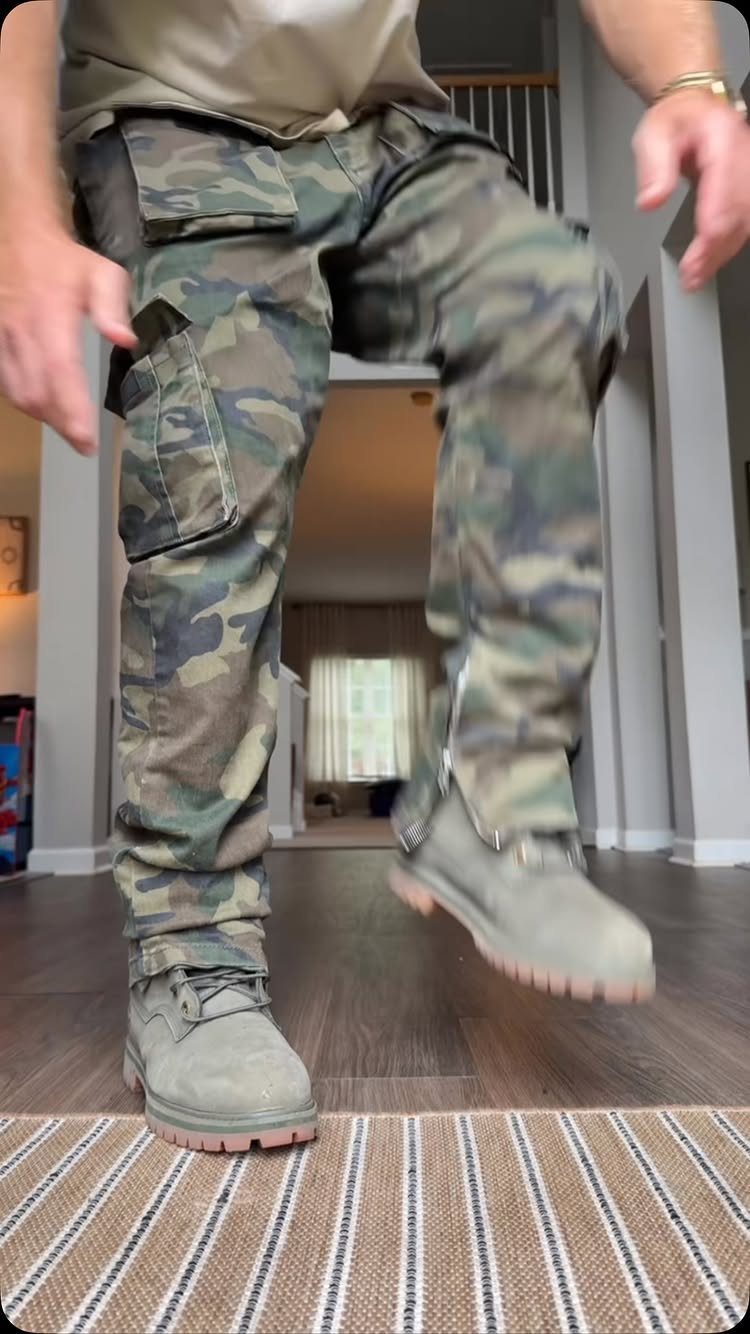
Pockets set above the knee, high on the thigh, are the version I trust for daily use. Your hand reaches them without bending, and the weight sits close to the hip instead of swinging near the shin.
Check this in the fitting room: sit down, then reach into each pocket. If the flap digs into your leg or you have to hunt for the opening, the placement is wrong.
Zippered hems, like the camo pair here, pair well with boots.
5. Casual Cargo Pants
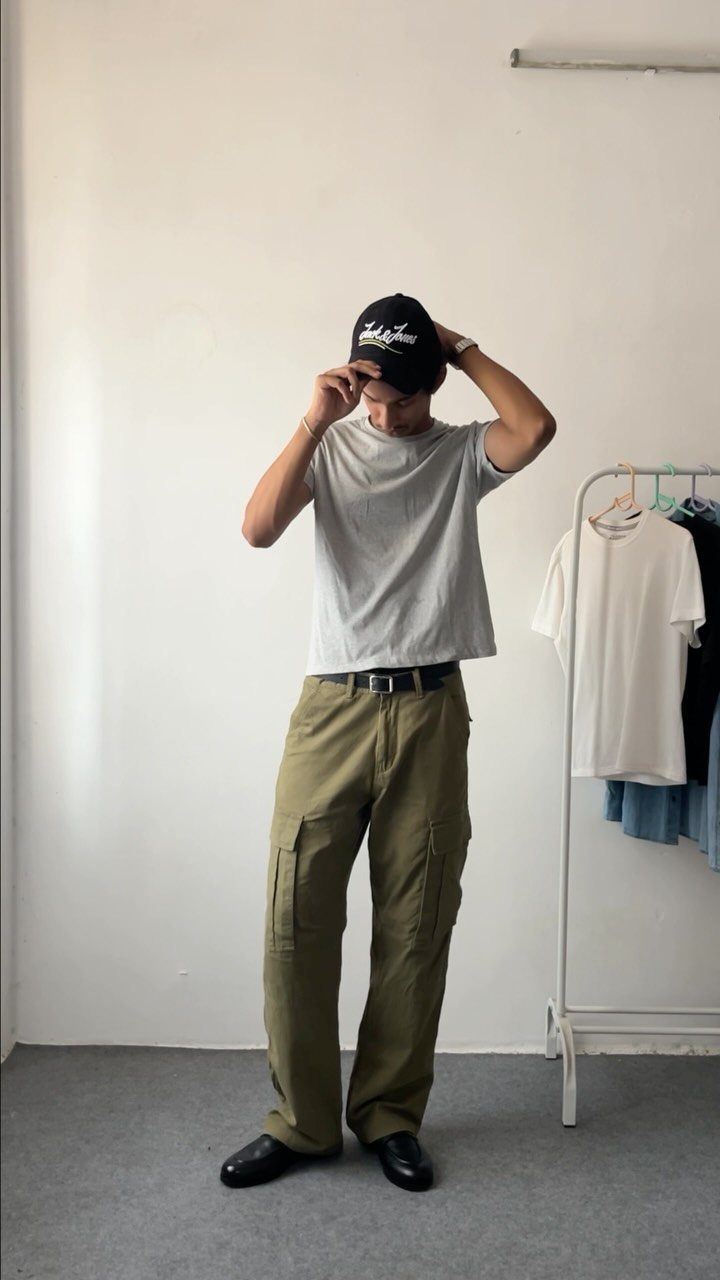
Casual cargo pants are the easiest of these to wear on a normal day, with sneakers, boots or slides.
Olive green goes with nearly everything, and a plain grey tee plus black shoes is a complete outfit with no extra thought.
Add a black cap for a sportier feel, or swap the tee for a overshirt when it cools down. I’d buy these before any of the other styles if you only want one pair.
Cargo Pants Versatility
Cargo pants stretch further than most people expect, and the dressier end is the part worth trying.
Black cargos with a blazer, a nice sweater or a dress shirt read as smart-casual, as long as the pants are clean and the pockets lie flat.
Sleek loafers finish the look. Sneakers are too casual here and pull the whole look back down to errand level.
For everyday wear, cotton or a cotton blend with a mid-rise fit pairs easily with T-shirts, sweatshirts and hoodies. That covers errands and travel days without any extra planning.
Common Fit Issues
A pair that hangs fine on the hanger can start to sag, swing or catch on things once a phone and wallet are in the pockets, because cargos are heavy by design.
The thigh is where most pairs fail. Thighs fuller than your waist suggests?
Size up one in the waist and add a belt. That beats being restricted in the thigh.
A quick checklist:
- Waist: 2 fingers fit in the band. More means too big; less means size up.
- Through the seat, nothing should pull when you lean forward, and the back pockets should stay shut.
- At the knee, look for fabric that neither bunches nor tugs.
Care and Maintenance
Good fabric quality and clean pocket placement matter more than any fancy feature, and both make a pair easier to live with over time. Follow the care label, and you’re mostly done.
Washing can change how a pair fits, so run the checklist again after a few cycles. If they gape, the fit has drifted and a belt or a tailor is the fix.
Frequently Asked Questions
How should cargo pants fit?
Cargo pants should sit comfortably at the waist, with room through the thigh and a clean, straight leg. A quick check: 2 fingers should fit inside the waistband, and nothing should pull across the seat when you lean forward.
Fuller thighs than your waist number predicts? Buy the bigger waist and let a belt take up the slack.
What is the difference between relaxed and tailored fit?
Relaxed cargos hang looser and read casual; tailored pairs follow your leg more closely and look sharper.
Even a loose cargo needs a shape: extra width through the thigh, then a straight line down to the hem. Tailored pairs look better dressed up but lose some of the utility feel.
Can you wear cargo pants to the office?
Yes, in a smart-casual office. A black pair works with a blazer, a good knit or a collared shirt, provided the fabric is crisp and the pocket flaps stay flat.
Loafers in a slim profile finish it; sneakers drag the look back to a quick trip for groceries.
What size is L in cargo pants?
A men’s size L usually matches a 33–34 inch waist, with a 41–42 inch hip and a 31–33 inch inseam.
Wrap a tape around your natural waist, then check that number against the brand’s size chart. Between sizes with solid thighs or hips, go up: extra waist is easy to cinch with a belt, while snug thighs have no fix.