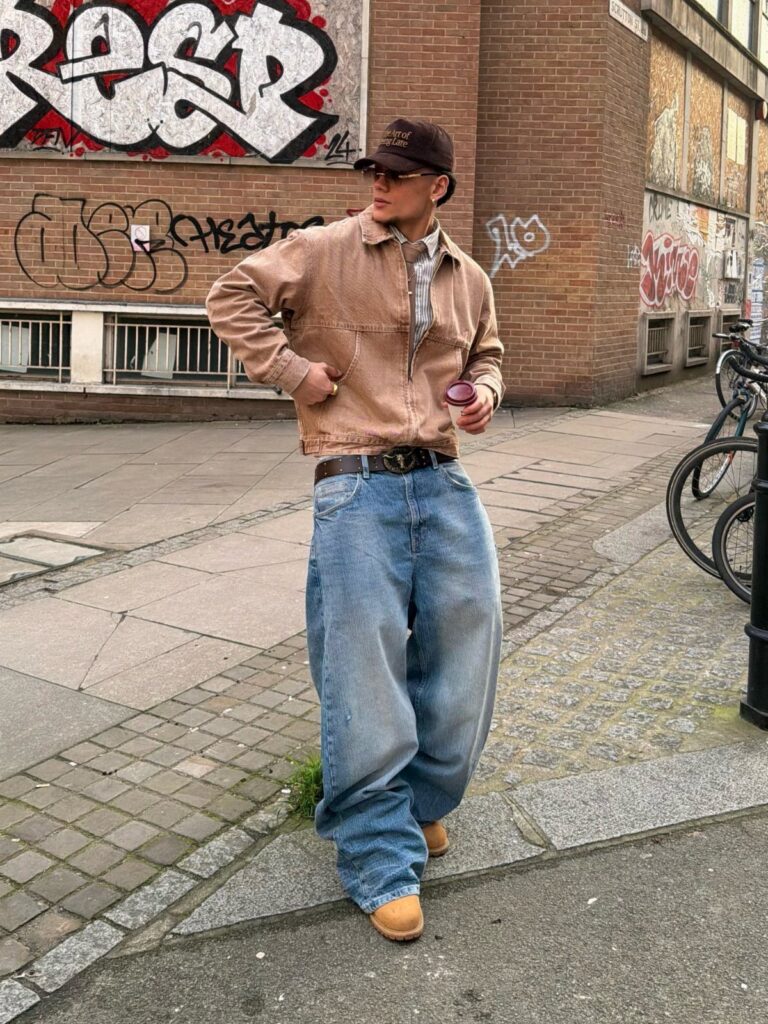
The list runs from graphic and statement tees to baggy jeans, varsity and utility jackets, oversized hoodies with beanies, and a necktie on an oversized shirt, and what separates them is how much of the outfit you want to say something.
If you like one loud piece and quiet everything else, start with the graphic tee or the oversized hoodie and beanie; if you’d rather let proportion do the talking, the baggy jeans or the oversized shirt with a tie will suit you better.
Whichever you choose, comfort sets the limit: you should be able to sit, reach and walk a few blocks easily.
1. Graphic and Statement T-Shirts
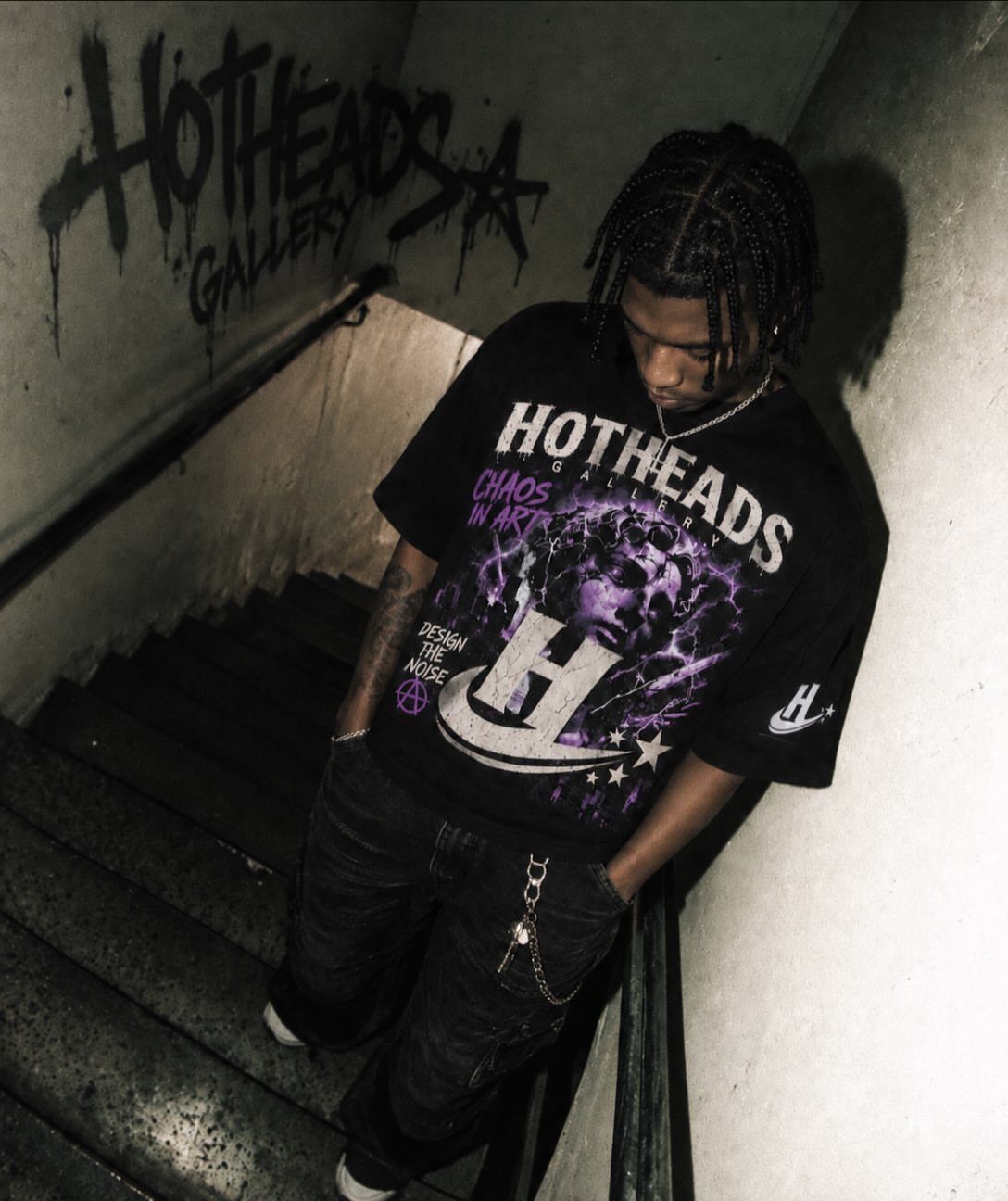
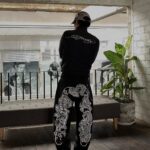
A black tee with a loud graphic is the one piece in this look that does the talking, so I keep everything around it quiet. Dark jeans and a wallet chain are enough.
Pick a size up from your usual for the oversized drape, and choose a graphic you would actually want to explain. Black hides wear well and makes print colors hit harder.
2. Baggy Jeans and Wide-Leg Pants
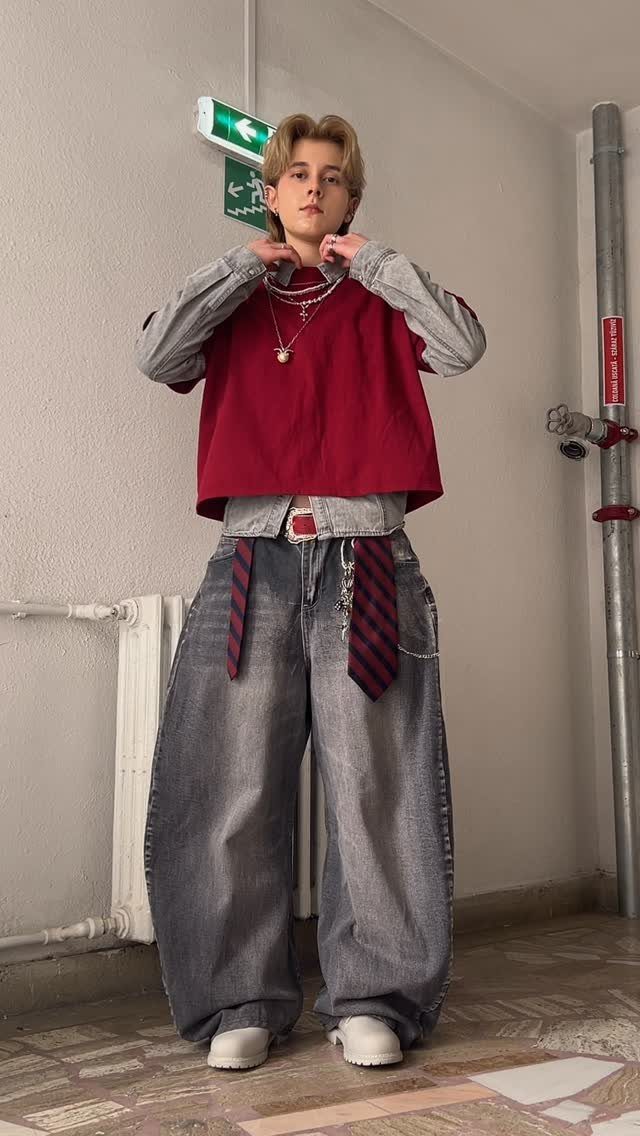
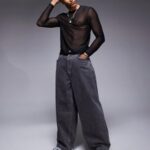
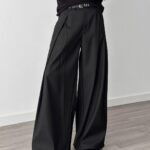
Extremely wide-leg denim is the loudest silhouette here, and I’d rather commit to it than half-wear it. Grey washes read softer than black, which helps when the leg is this big.
Let the hem break over clean white shoes so the width looks intentional. Keep the top simpler than the pants, or layer a few pieces and let one color, like red, lead.
A belt with ties looped through is an extra I’d try once the basics feel easy.
3. Varsity and Utility Jackets
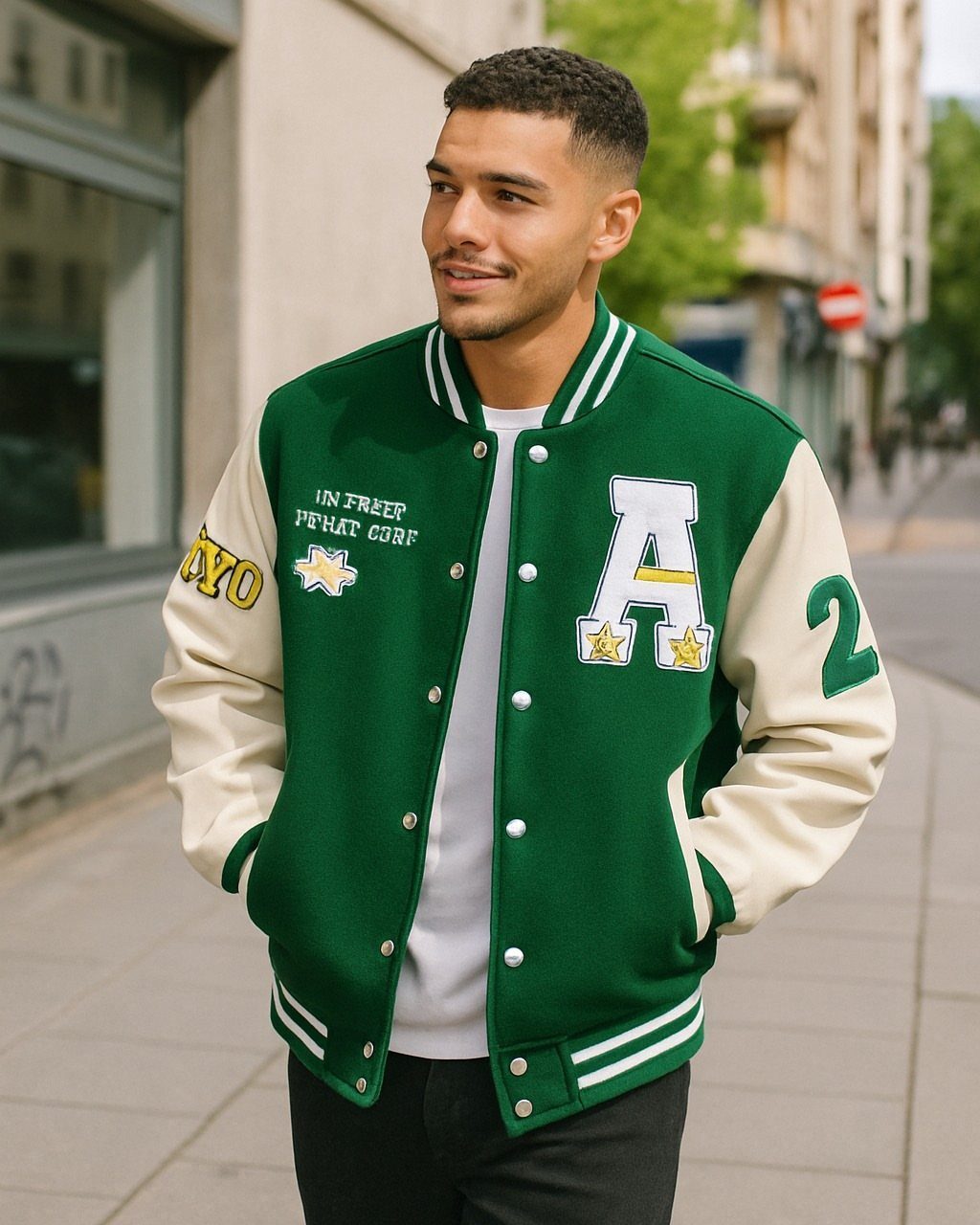
Green and cream is a calm pairing, and a varsity jacket with a single letter on it keeps the whole outfit easy. Wear it over a plain white tee and dark pants; nothing else needs to compete.
Buy it for the shoulders first. If the jacket sits right there, a slightly loose body looks relaxed instead of sloppy.
I like the contrast of sleeves and body in different colors, because it adds interest without a single extra piece.
4. Oversized Hoodies and Beanies

Matching a bright orange hoodie with an orange beanie turns one color into the whole outfit. That is the move: pick one loud shade and repeat it once, near the face.
Keep the rest neutral. Baggy grey jeans and tan boots let the orange carry things without turning the look into a costume.
A patterned beanie is my pick over a plain one, since it breaks up the solid hoodie. The cost is that the look is hard to dress down, so save it for casual days.
5. Oversized Shirt with a Tie
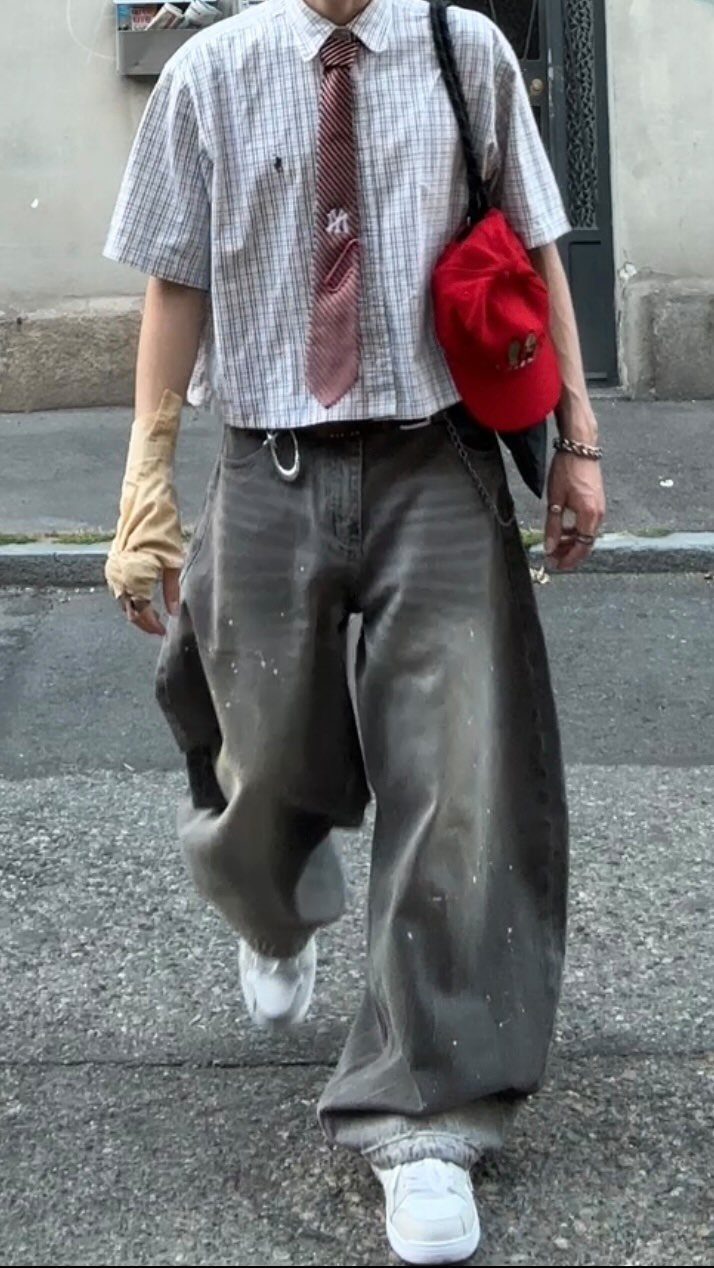
A necktie on an oversized short-sleeved plaid shirt looks like a joke until the proportions agree, and here they do. Loose shirt, loose grey trousers, white sneakers: everything is relaxed, so the tie reads as styling instead of formality.
Choose a striped tie against the plaid, and leave the knot a little loose. I’d skip a tight collar button.
A cap on the bag strap is an easy add, and it keeps the look casual.
Streetwear as Self-Expression
Streetwear has no uniform, and that is what makes it worth wearing. Start with ordinary clothes you already own and change them until they say something about you.
Graphics, logos and bold designs are the easiest place to start, because a single piece can show what you’re into. Pick the one that fits your own interests rather than whatever is loudest on the rack.
The style is also open to everyone, across gender and cultural background. So there’s no template to match, and copying a look head to toe usually reads as less personal than building your own.
Evolution of Streetwear
The look took shape around 1980, when skaters and surfers in California and rappers in New York each started dressing in ways that had nothing to do with the mainstream.
That history is useful when you shop: the pieces that last are the ones with a real function behind them, like hoodies, graphic tees and sneakers.
Today the same look runs from DIY to luxury collaborations.
I’d mix the two ends instead of choosing one. A single well-made collaboration piece among basics you already like usually looks better than a full head-to-toe label.
Music and art keep feeding the style, so album covers and videos are good places to find ideas that haven’t spread yet.
Importance of Comfort
Comfort is the starting point, and the pieces are loose by design: hoodies, oversized tees, joggers and baggy jeans. Good streetwear still has style built into it, through bold graphics, logos and unusual details.
So buy for how you move, then check the look. If you can’t sit, reach or walk a few blocks easily, the fit is wrong, however good it looks standing still.
I’d also favor sneakers you’d happily wear all day. Shoes that hurt undo the relaxed feel of everything above them.
Frequently Asked Questions
What is the streetwear aesthetic?
It’s a relaxed, comfort-first look built on loose pieces like hoodies, oversized tees, baggy jeans and sneakers, with bold graphics and logos doing the talking.
It grew out of skate, surf and hip hop dress and still pulls from music and art. I’d say the pieces matter less than the attitude: nothing is a uniform, so the outfit should say something about you.
How can I create a streetwear look?
Start with a loose top, such as an oversized tee or hoodie, then add wide-leg or baggy jeans and sneakers you can wear all day.
Pick one piece to carry the outfit, whether that’s a graphic jacket or a bold sneaker, and let everything else stay plain; a single bright color works too, if it shows up a second time near your face.
Caps, beanies and bags finish it without adding much effort.
What clothes are commonly worn in streetwear?
Hoodies, graphic tees, sneakers, baggy jeans, joggers and jackets such as varsity styles are the core.
Beanies and caps are the usual accessories. These pieces last because each has a real function behind it.
What is the difference between street style and streetwear?
Streetwear is the clothing category: hoodies, graphic tees, sneakers, cargo pants and caps. You can wear streetwear and still have no style, and the reverse is also true.