The list runs from Traditional and Punk-Influenced goth, which can be a black tee and a few spikes, to Vampire and Cowboy goth, which ask for far more, so the effort you’ll put in decides which one fits you.
If you want the lightest commitment, punk-influenced goth puts all the work into the hair and lets the outfit stay plain.
If you’d rather dress the part head to toe, Vampire Goth and Cowboy Goth ask for more pieces, and Goth Fashion Basics covers the black staples that hold either look together.
1. Traditional Goth Style
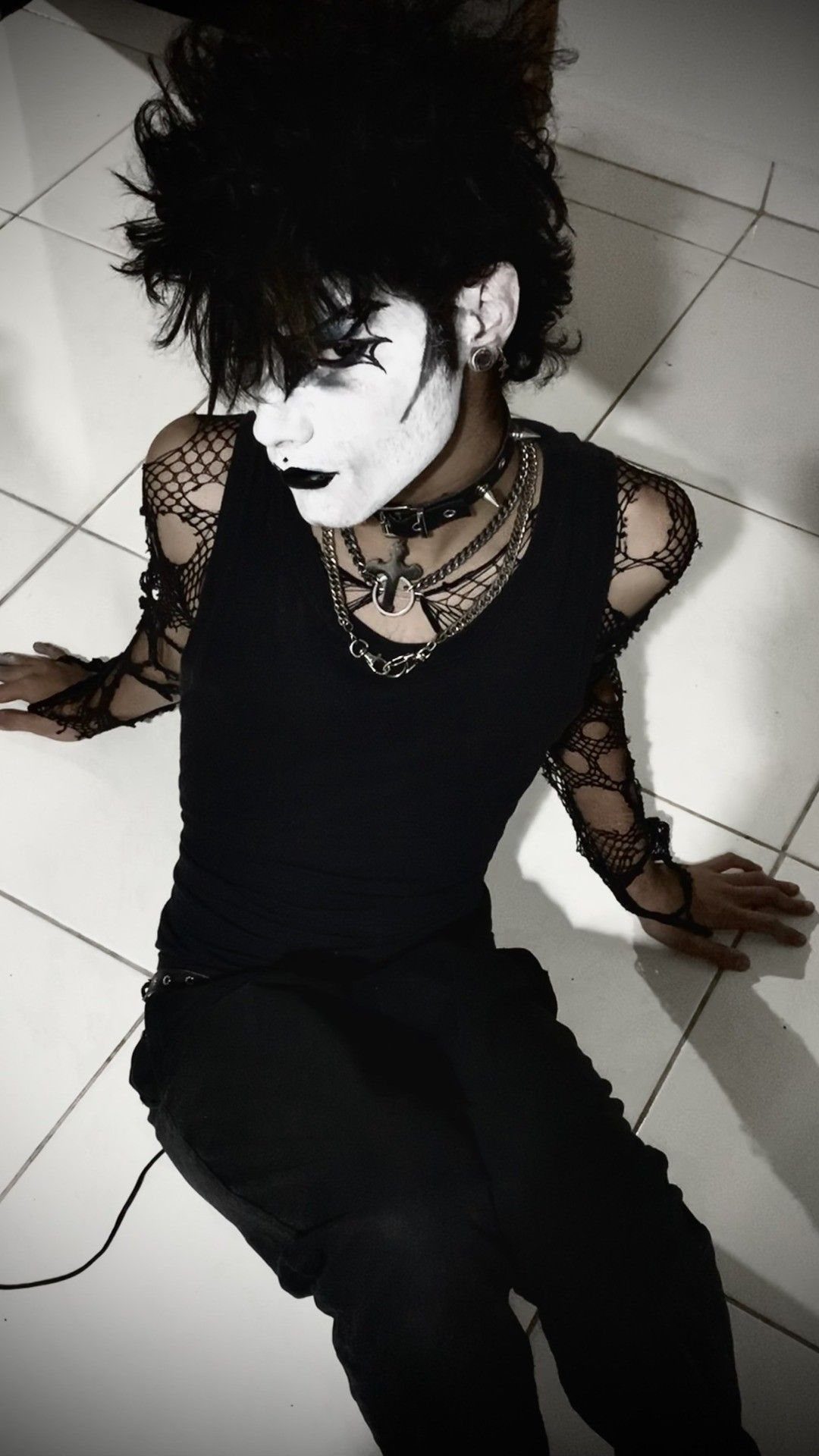
Teased black hair, pale makeup, fishnet sleeves and silver chains: this is the original 1980s goth look, and it still reads clearly today. A black tank is the easiest base because the sleeves and chains do the talking.
I’d keep the metal to silver and stack 2 or 3 chains at different lengths. Fishnet over bare arms gives the look its texture, so skip anything busy on top.
2. Punk-Influenced Goth Style
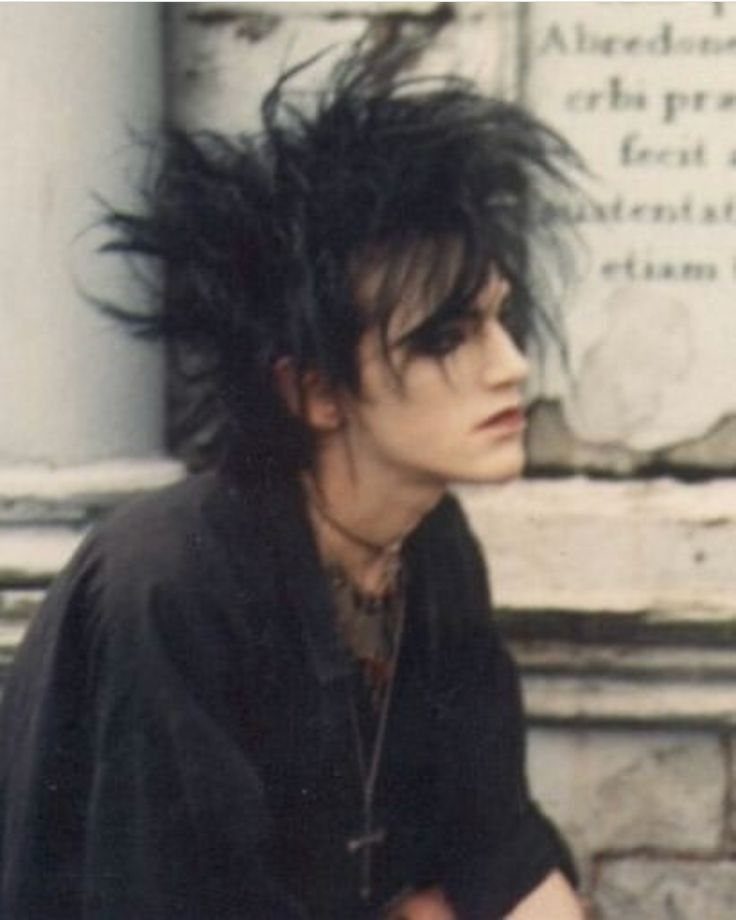
Spiky or heavily teased hair is what pushes goth toward punk, and it does most of the work here.
Pair it with dark eye makeup and pale skin, then keep the clothes plain: a loose black top and a single cross necklace.
I like this version for men who want goth without a full costume. The hair is the commitment; the outfit can stay a normal black tee.
3. Vampire Goth

Vampire goth borrows from vampire myth and literature, and the clearest signal is the red lip against pale makeup. Build the rest in black: a corset, fingerless gloves and shaggy, longer hair.
The corset is the piece to get right. Wear it over a fitted black layer so it looks deliberate, and let the gloves be the only other accessory.
4. Cowboy Goth
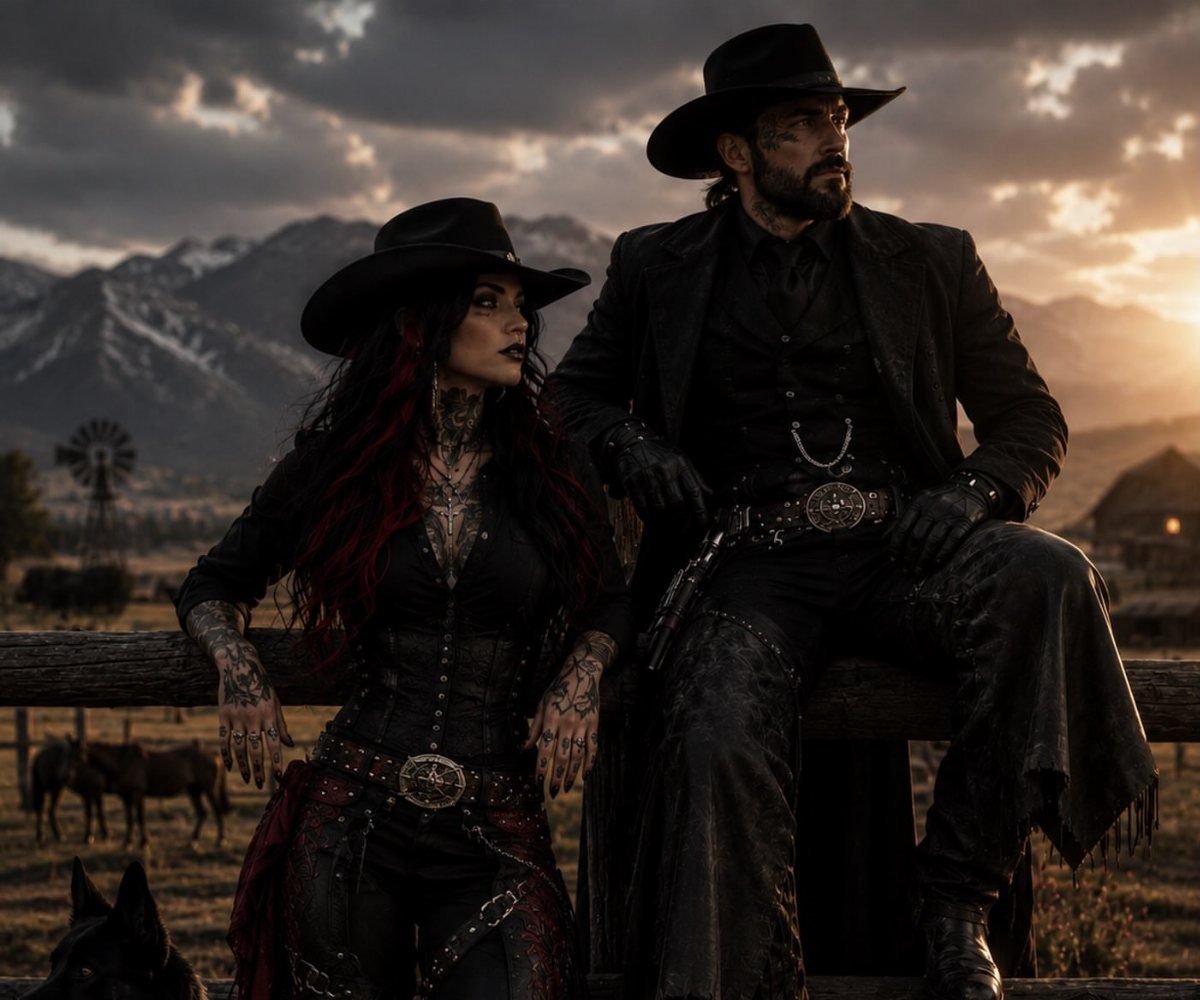
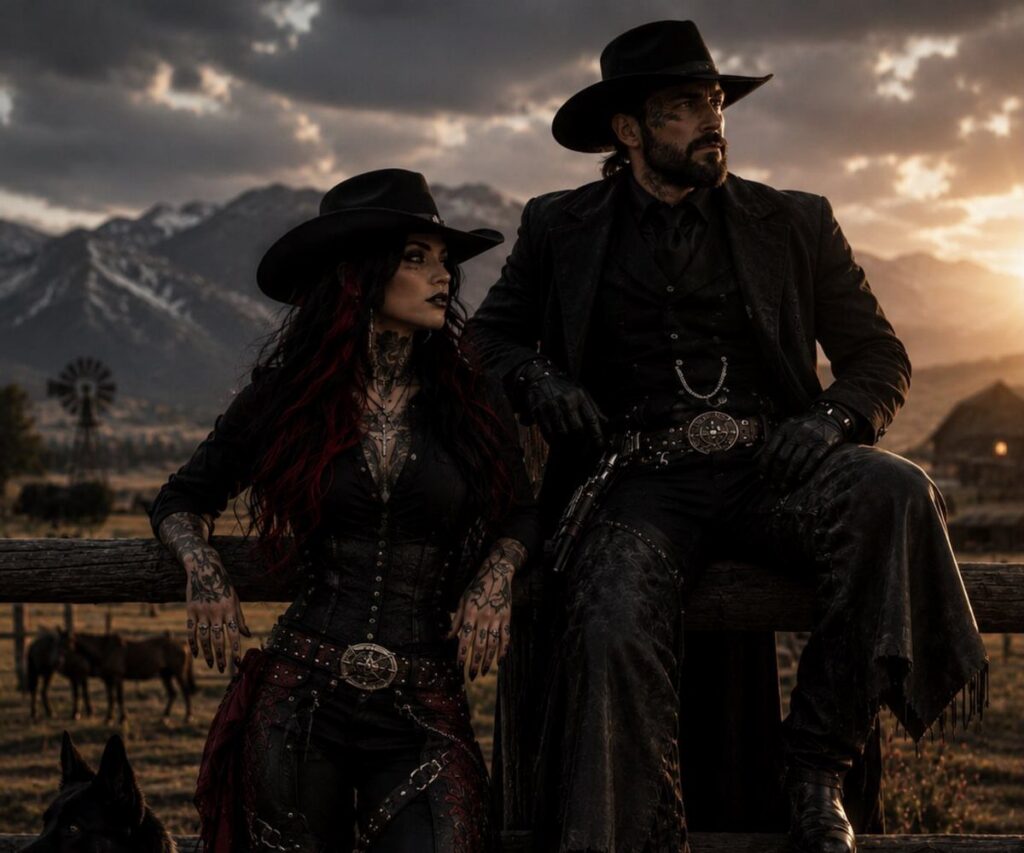
Cowboy goth keeps the western silhouette and drains the color out of it.
Cowboy goth takes western pieces like a pearl-snap shirt, a bolo tie, a wide-brim hat and pointed boots, and puts them all in black, so the silhouette stays rugged while the mood turns darker.
The easiest entry point is one western piece in black, such as boots or a hat, worn with your usual dark clothes. Going head to toe works too, but it’s the most costume-like way to do it.
Goth Fashion Basics
Black is the base, but deep purples, reds and sometimes white show up as accents. Jewel tones work too, and they are an easy way to keep an all-black outfit from going flat.
Texture does the rest.
Velvet, lace, mesh and leather are the usual fabrics, and they look best layered: a mesh top under a leather jacket, or a velvet shirt under a long coat. Choose 2 or 3 textures per outfit so each one stays visible.
Footwear matters as much as clothes. Platform shoes, boots and creepers all fit, and a chunky sole balances a long coat better than a flat sneaker.
Band T-shirts are the simplest piece to start with. Religious or occult imagery also fits the look, and a single choker or handmade accessory is plenty.
Goth Music Influence
Goth fashion began as a way to show what you listened to. London’s post-punk scene of the early 1980s is where goth started, and the black clothes spoke for the music before anyone opened their mouth.
If you want the look to make sense, listen to the bands behind it: Bauhaus, The Cure, Sisters of Mercy, Siouxsie and the Banshees and Joy Division.
Gothic rock is darker and more atmospheric than punk, and the clothes follow that mood.
The first goths teased their black hair high, wore pale face makeup, and dressed in dark pieces borrowed from Victorian mourning wear and punk.
A band tee from one of these groups is the most honest way to wear the style, since it points straight at the source.
The Batcave, a London nightclub that ran from 1982 to 1986, helped turn the scene into a movement.
Deathrock fashion, much like goth music, is closely related to goth fashion. The influences of the style come from a blend of glam rock, punk rock, gothic horror literature, and undead characters of classic horror films.
Goth Community and Events
Through the early 1990s the scene’s center of gravity moved from Britain to Germany. The German scene is called "Grufti," and it built city-wide events rather than small club nights.
Performances happen in venues like opera houses, museums and cemeteries, so plan outfits that can handle a lot of walking between them.
M’era Luna in Hildesheim is also annual and is the more commercial option. Pick it if you want a festival feel over a citywide one.
Both are worth knowing even if you never travel.
Frequently Asked Questions
How many types of goth are there?
There is no fixed number. Lists online run from 16 to more than 30 styles, depending on who is counting.
Nobody agrees on a number, because the whole idea of goth "types" began as a joke among goths trading posts on 1990s Usenet, and later fans took it literally; read any list as a rough map and not a set of rules.
Is goth liberal or conservative?
Goth culture is generally seen as liberal, since it leans on individualism and diversity.
It grew out of London’s early 1980s post-punk scene, where the clothes were a way to say who you were. Nothing in the style requires a political position, though.