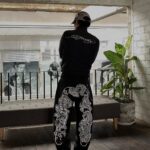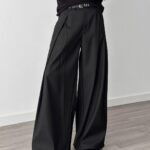
Which of these pieces fits depends on what’s already in your closet: a band tee or a long sleeve to layer under it costs almost nothing, while studded belts, wristbands and plaid-tongue canvas sneakers are add-ons that only work once the basics are in place.
Start with the shirt, then add one or two details.
1. Vintage Band Tees
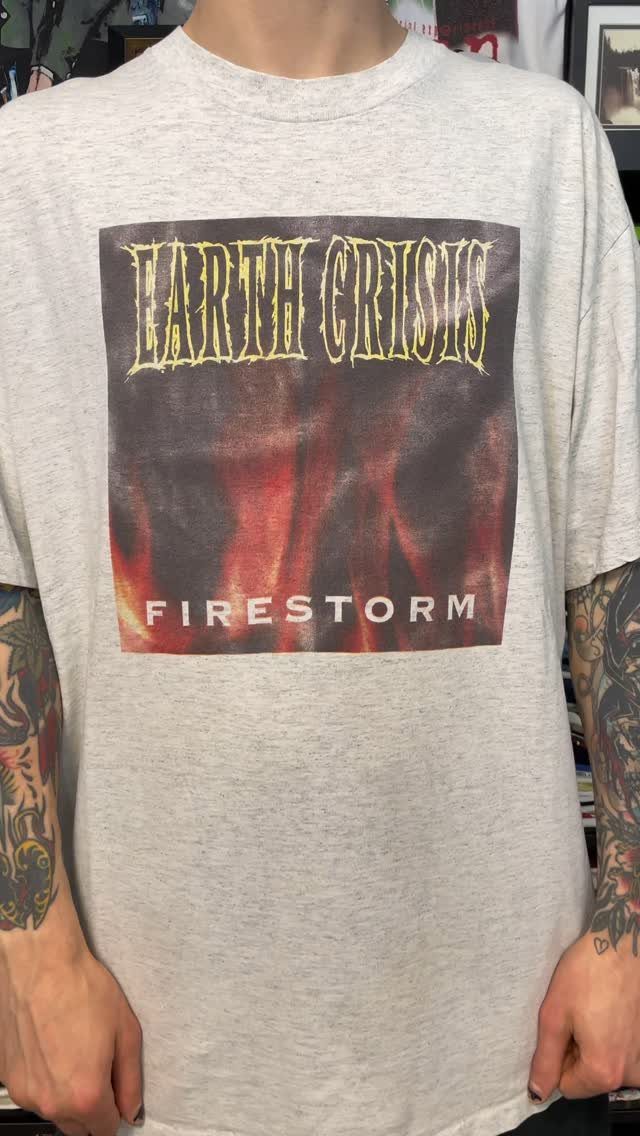
A grey heather tee with album art and a band name across the chest does most of the work in a 90s emo outfit. The faded gray softens a loud graphic, so it reads as worn in rather than costume.
Dark jeans and plain shoes let the tee do the talking.
Pick a shirt that fits through the shoulders, since a baggy one swallows the print. A shirt from a band you actually listen to beats one chosen for looks.
2. Studded Belts
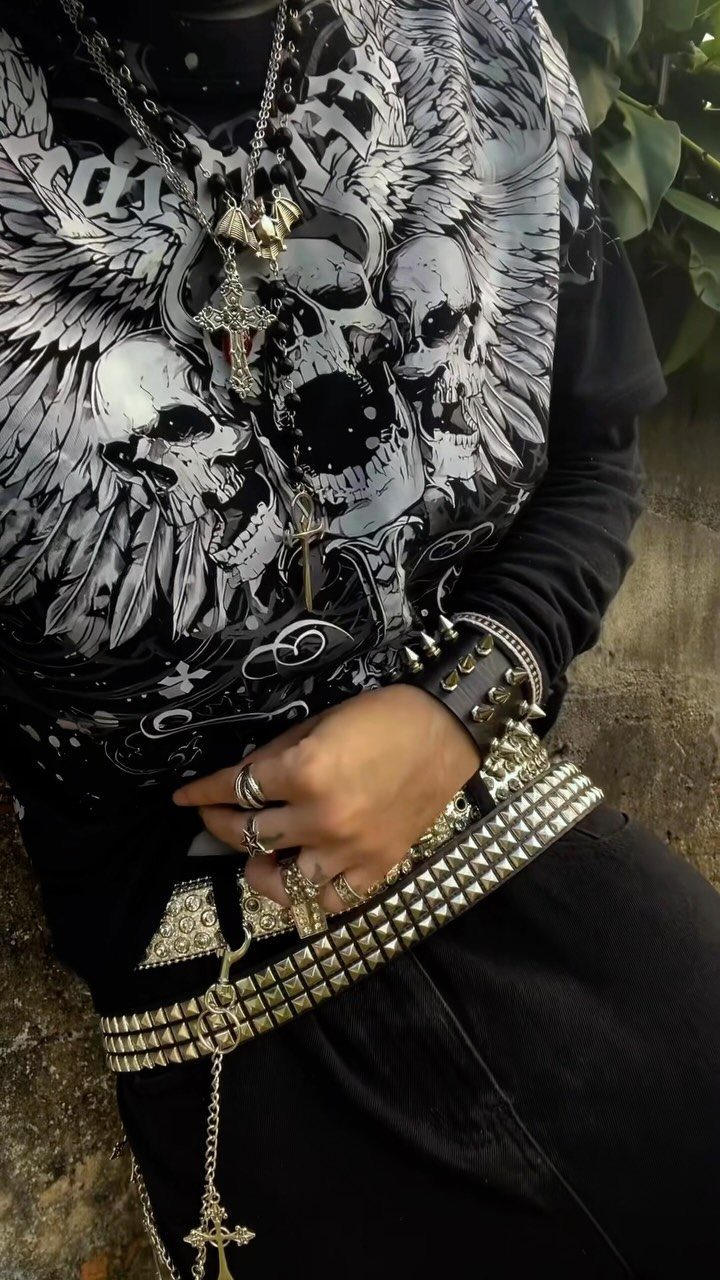
Wide studded belts carry the metal in this look, and I like them stacked: one silver studded band, one with rhinestones, sitting low over a graphic tee. The shirt stays dark so the hardware is what you notice.
Match the metal to your chains and rings, silver with silver.
2 belts is plenty; add a third and the whole waist turns into a pile. Studs can snag a thin shirt, so wear them over heavier cotton.
3. Layered Long Sleeve Shirts
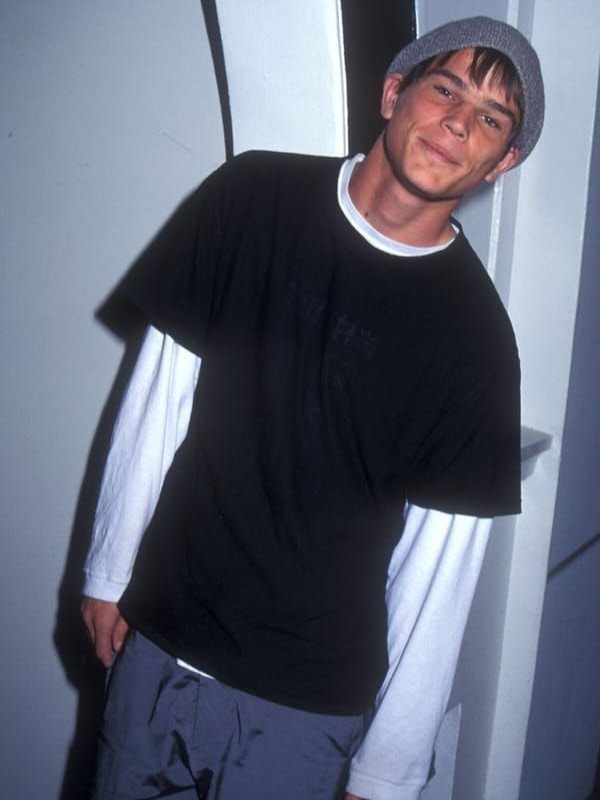
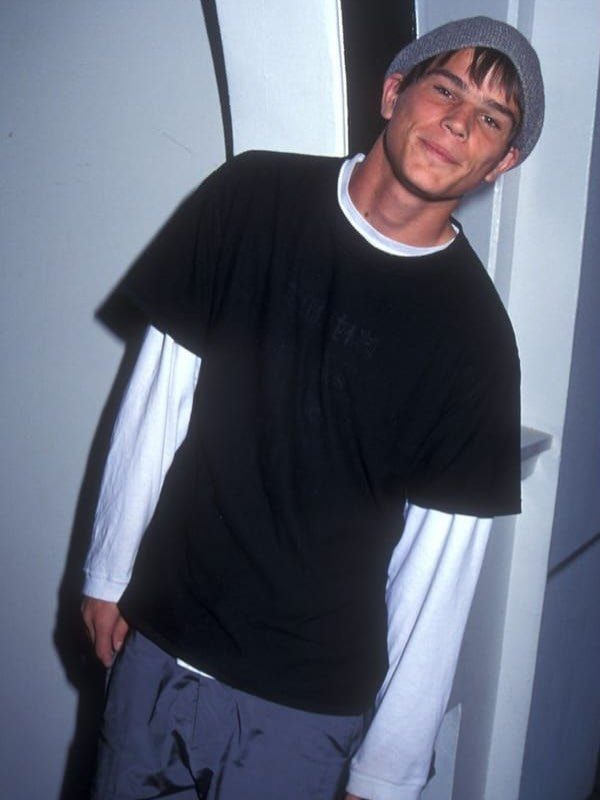
A short-sleeved graphic tee over a contrasting long-sleeved shirt is the easiest layering move here. Black over white gives the cleanest split, and the white sleeves show just enough to break up the dark.
Keep the long sleeve plain and fitted so the top tee’s print stays the focus.
Add a beanie and dark trousers and the outfit is done. It also works in cooler weather without a jacket.
4. Plaid Tongue Canvas Sneakers
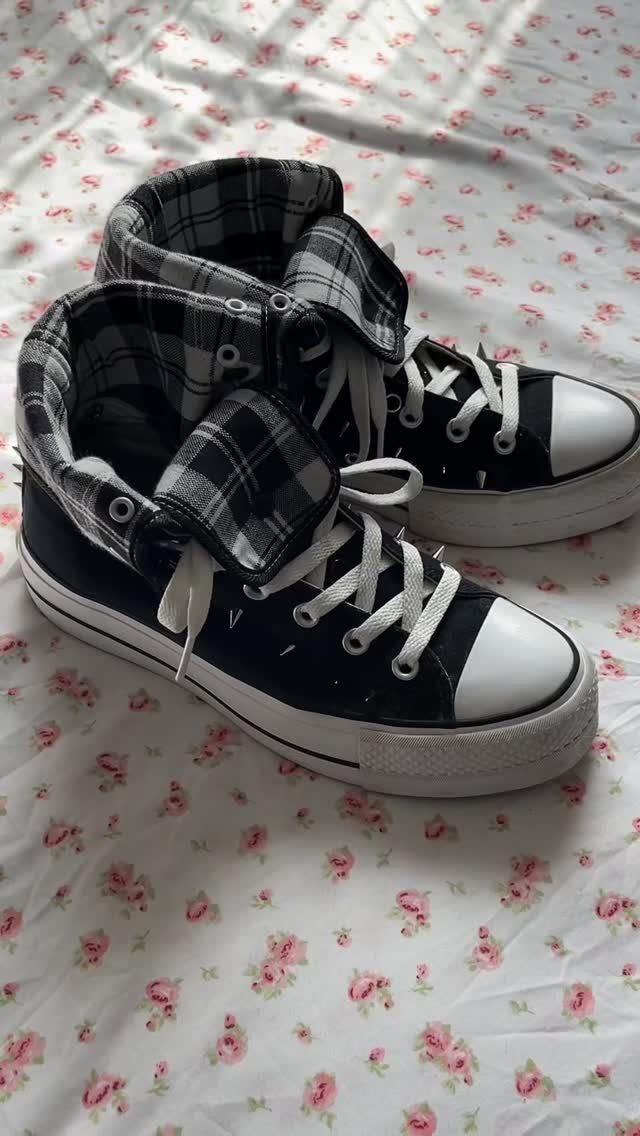
Black high-top canvas sneakers with black-and-white plaid tongues put the pattern right at the shoe. Fold the tongue down over the laces so the plaid shows, which is what makes them feel period-correct.
Since the shoe carries the detail, I would wear it with solid dark jeans and a plain or band tee. Canvas is cheap and easy to replace, and the high top suits a slim or straight leg.
5. Spiked and Studded Wristbands
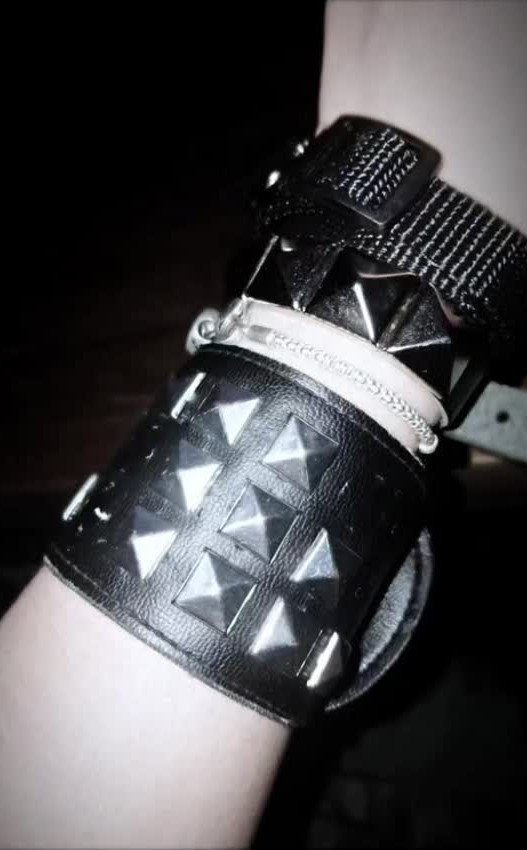
A wide black leather cuff with large silver pyramid studs is the wristband I would start with. It sits on the wrist as a statement piece, and thinner black and silver bands layered beside it add depth without competing.
Keep the studs silver to match your belt and chains.
Leather needs a few wears to soften, so expect some stiffness at first. One cuff is the focus; the rest are filler.
Emo Fashion History
Emo clothing started in the 1980s, coming out of the hardcore punk scene, and it had no uniform at first.
Musicians and fans wore practical things: simple shirts, jeans, sneakers and DIY pieces that matched the independent spirit of the music.
That history is useful if you’re building an outfit now. Authenticity came before appearance, so start with ordinary basics you already wear and add one or two period details rather than buying a full costume.
The recognizable look came later, as the style moved through the 90s and into the 2000s and each generation added its own influences.
If you want the 90s version specifically, keep it plainer and more worn in than the 2000s one.
Performers and attendees alike observed the core pillars of emo dressing: plaid, studs, fishnets, stripes and leopard print.
Differences Between Emo and Punk
Emo grew out of punk’s DIY streak, yet the wardrobes split fast: punk leans on patches, safety pins and ripped leather, while emo goes for slim black denim, striped knits and band tees that fit close, with studs kept to small touches like a belt or wristband.
Punk leans on rebellion, political expression and DIY creativity, with leather jackets, ripped clothing, patches and bold accessories.
Emo is more personal. It centers on emotional themes and a connection to the music, so the outfit works as a statement about you and what you listen to, not a protest.
In practice, that means skipping the patch-covered leather jacket if you want to read as emo.
Keep the look quieter and tied to the music you actually like. Both styles prize individuality, so mixing a punk piece in is fine, but let the personal details lead.
Emo Fashion’s Resurgence
Emo style keeps finding new audiences because it ties to music, memories and identity, which makes it harder to dismiss as a passing trend.
Wear one or two era pieces with modern fits and everyday clothes, and it will look intentional rather than dressed up.
Buy band merch at a show or from the band’s online store, since that money supports the artists directly.
With no shows coming up, vintage is the other route, and archive merch specialists exist for exactly that. Keep whatever you buy; old tees tend to come back around.
Frequently Asked Questions
Is emo a 2000s style?
The style took shape in the 1980s hardcore punk scene, but it didn’t reach a mass audience until the early 2000s. Compared with that later look, the 90s version runs plainer and looks more lived in.
What were some trendy outfits in the 90s?
In 90s emo and alternative circles, outfits leaned on cardigans, simple button-up shirts, vintage clothing, slim jeans, band merchandise and comfortable sneakers.
The look was more relaxed and personal than the aggressive punk style before it. A faded band tee with dark jeans and plain shoes is the easiest way to copy it.
What is emo in Gen Z?
For Gen Z, emo is a style being rediscovered and adapted, not copied as a costume. Each new generation finds it again because the clothes are tied up with the music people grew up on and how they see themselves.
Most guys I’d point toward this keep it small: one or two pieces from the era, like a band tee or a studded belt, mixed into modern fits and ordinary clothes.