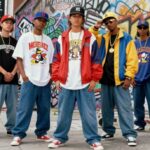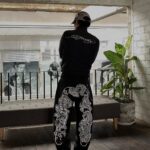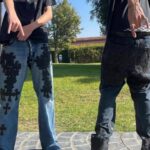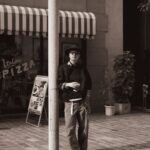
The 8 looks here run from black techwear jackets to oversized denim jackets worn with a tie, and what decides between them is how much attention you want the outfit to draw.
If you prefer to stay quiet, pick the techwear jacket or the chore coat, where pockets and fabric do the work.
If you can live with a few odd looks, denim jackets with ties are the loudest option on the list.
Whichever you choose, build the rest around that one piece, since the Arc’teryx shell and the wide-leg trousers both depend on muted basics.
1. Wide Jackets and Trousers
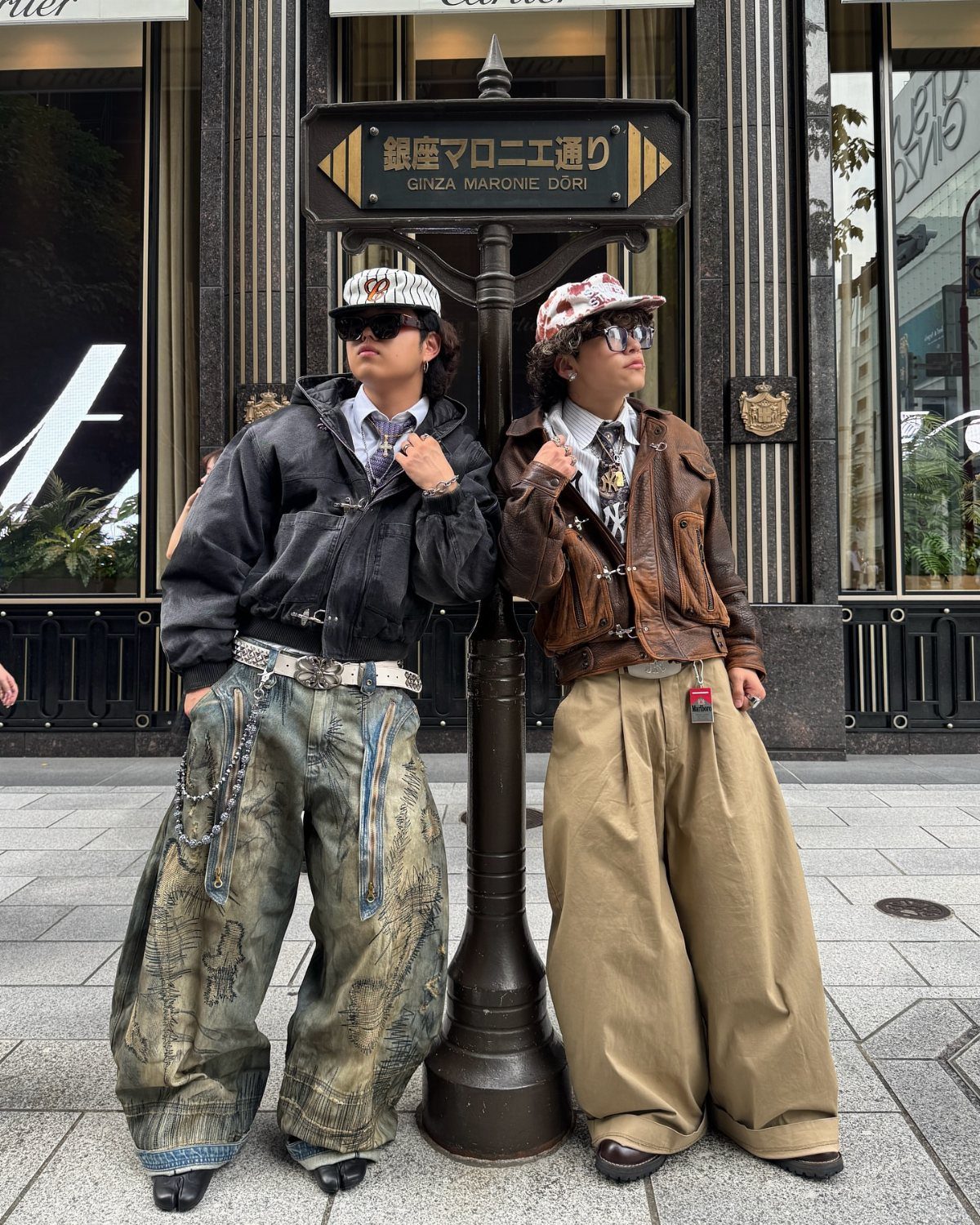
Volume does the work here, so keep everything else quiet. Trousers cut extremely wide and a jacket cropped short give you a shape that moves when you walk, and that fluid drape is the whole appeal.
Cropped jackets sit well with wide legs because the short hem keeps your proportions from turning into a tent.
A tie adds a sharp line against all that fabric, and a baseball cap keeps it relaxed. I would pick comfort over precision every time with this look.
2. Chore Coats
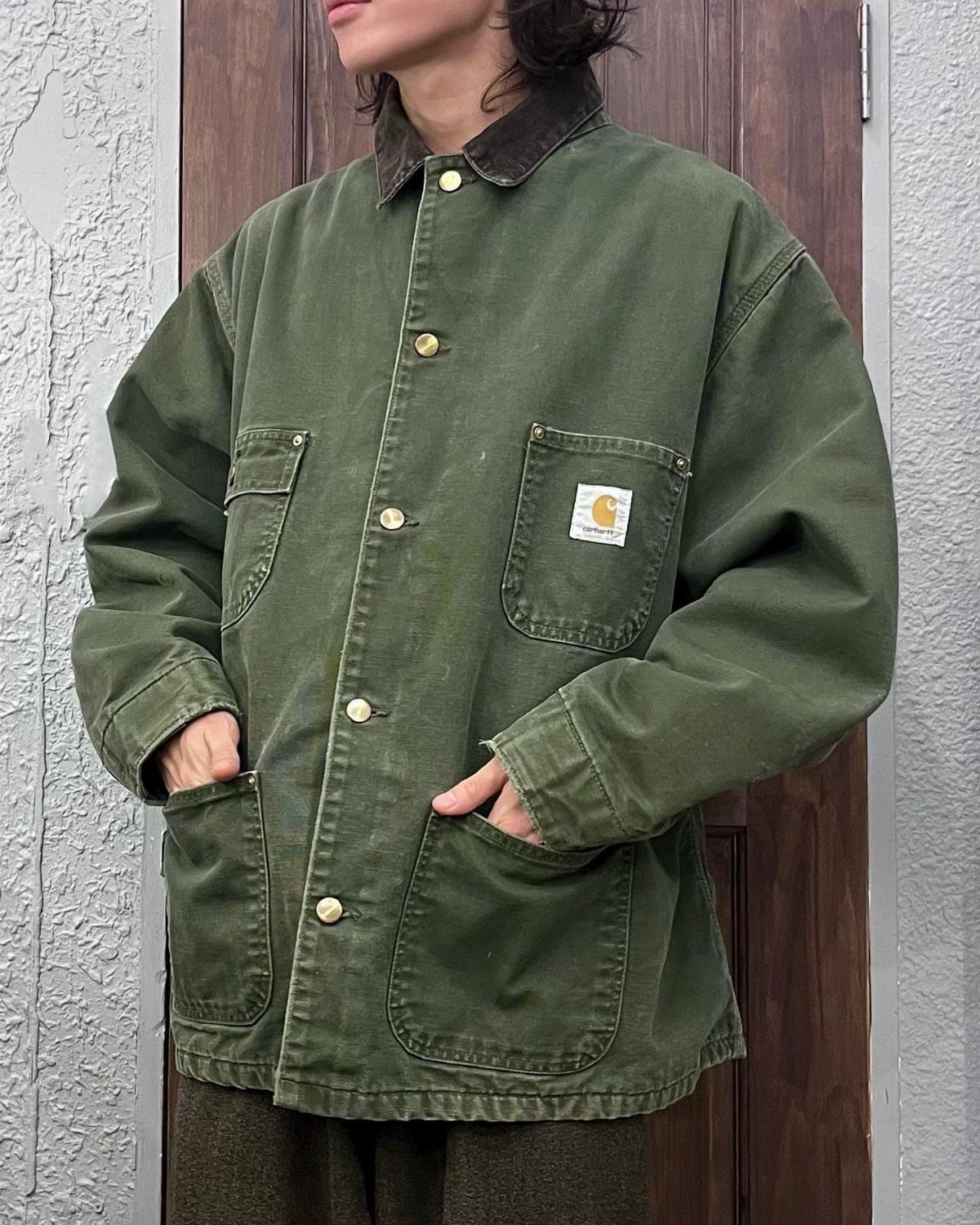
Patch pockets are the reason a chore coat earns its place. Big ones on the chest and hips hold a phone, keys and a wallet, so you can leave the bag at home.
Olive green canvas with a corduroy collar and brass buttons reads as workwear without trying hard, and it layers over a plain tee or hoodie with no fuss.
I like wearing it oversized, since the loose cut leaves room for a sweater underneath.
Plain work boots or sneakers finish it.
3. Cargo Pants
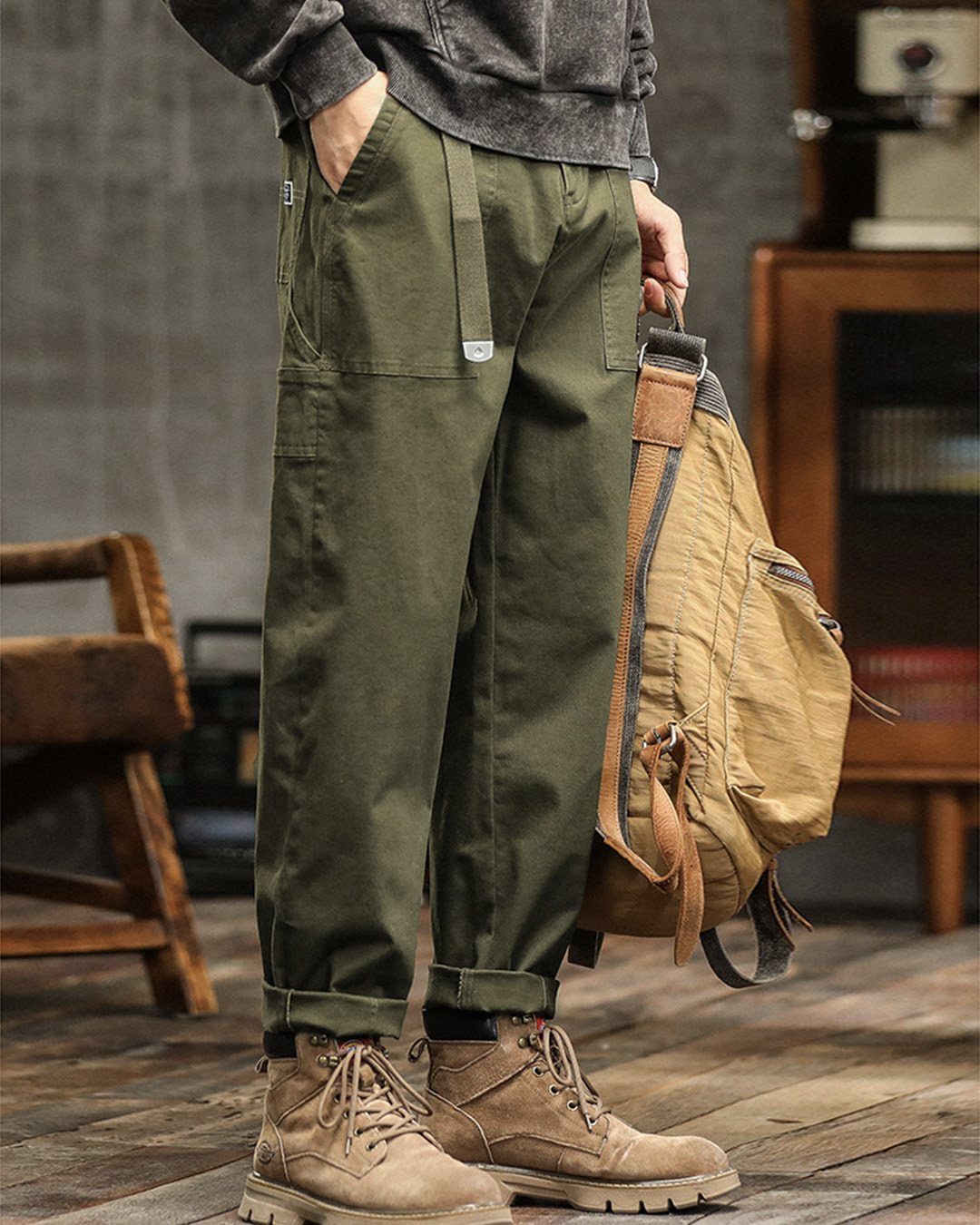
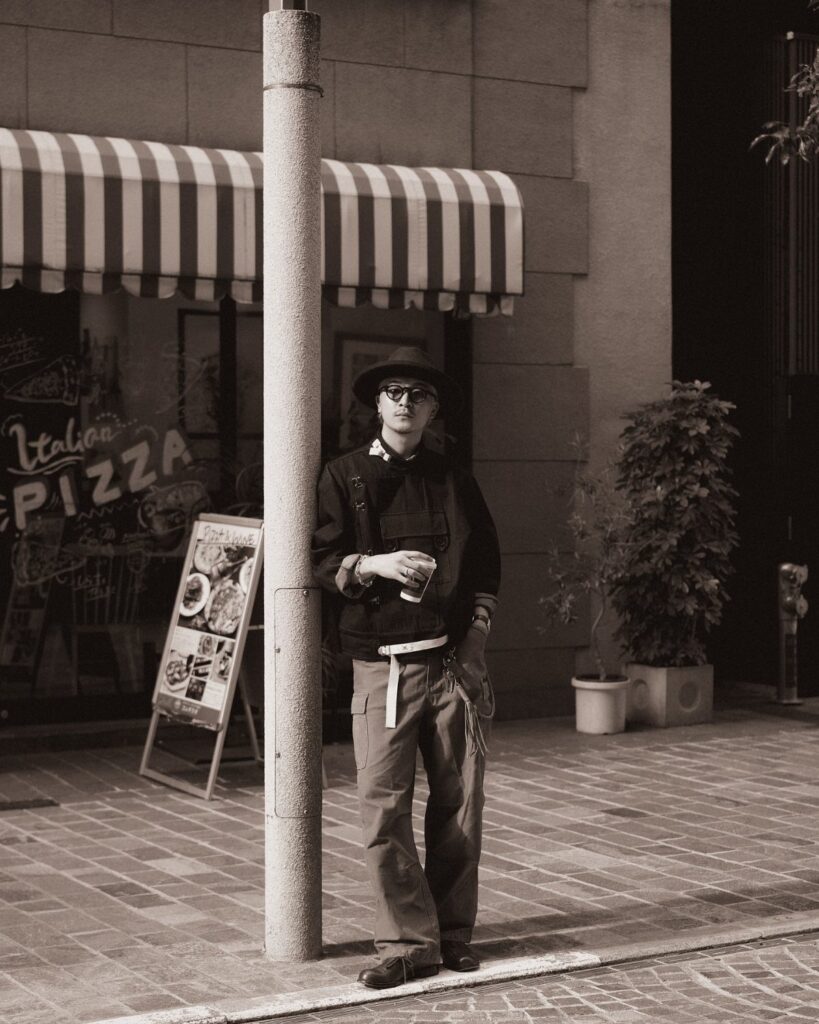
Cargo pants solve a small problem: where your hands and your stuff go. Cuffed olive utility pants with deep pockets carry a phone and keys, leaving you free to hold a backpack or a coffee.
I would keep the top half simple, like the grey or acid-wash sweatshirt that works well here. Tan suede work boots pick up the earthy tone of the green and keep the outfit grounded.
Cuffing the hem also keeps the fabric off your boots, which makes it easier to walk.
4. Layered Long Coats and Scarves
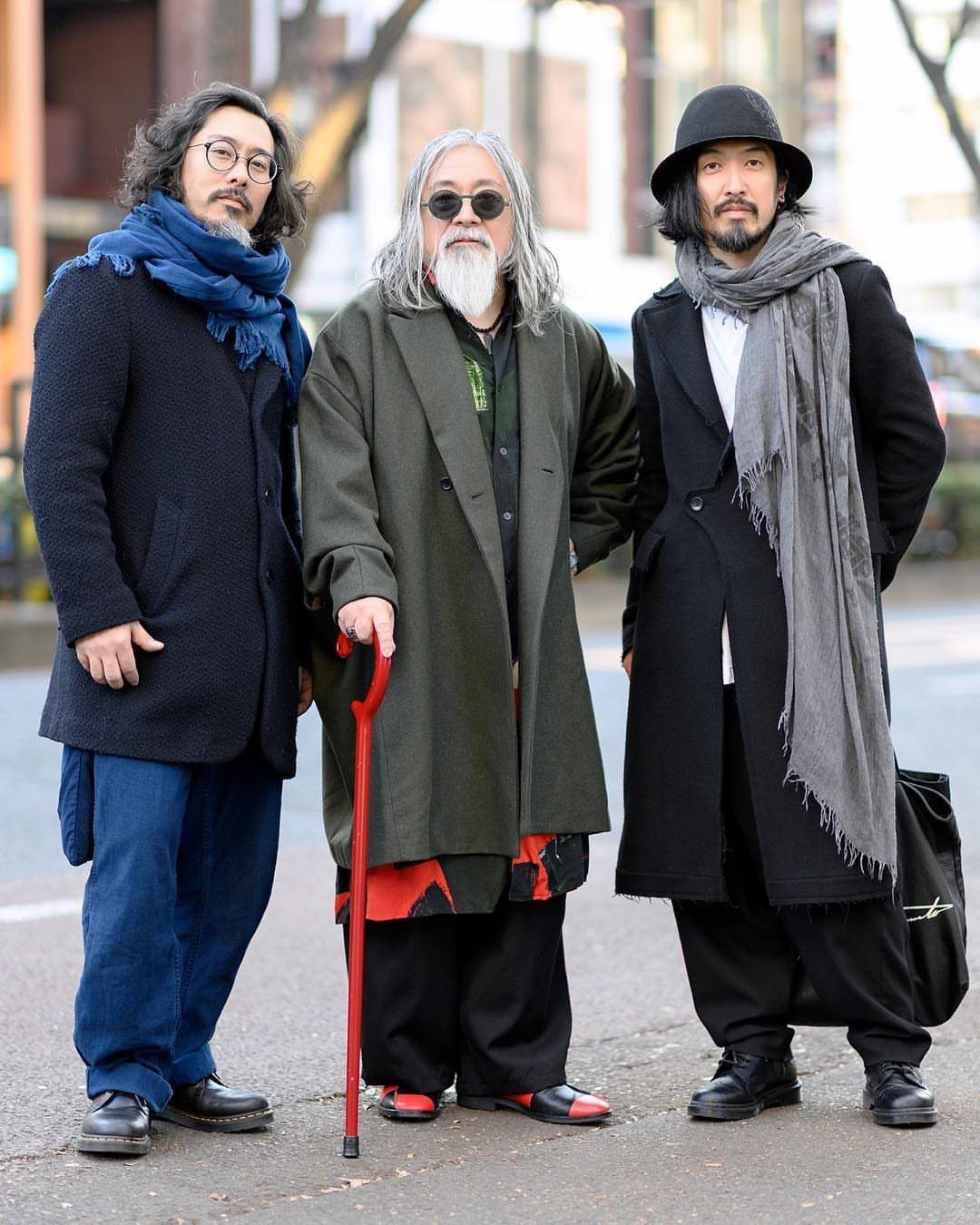
Stack a long coat over another layer and add a big scarf, and you get a silhouette that looks planned even when it is loose. Dark trousers underneath keep the column clean.
Accessories carry the personality: a hat, sunglasses, even a red cane if you are bold enough. I would pick one loud piece and let the rest stay muted, because the layers already supply plenty of visual interest.
This look suits men of any age, which is rare in streetwear.
5. Black Techwear Jackets
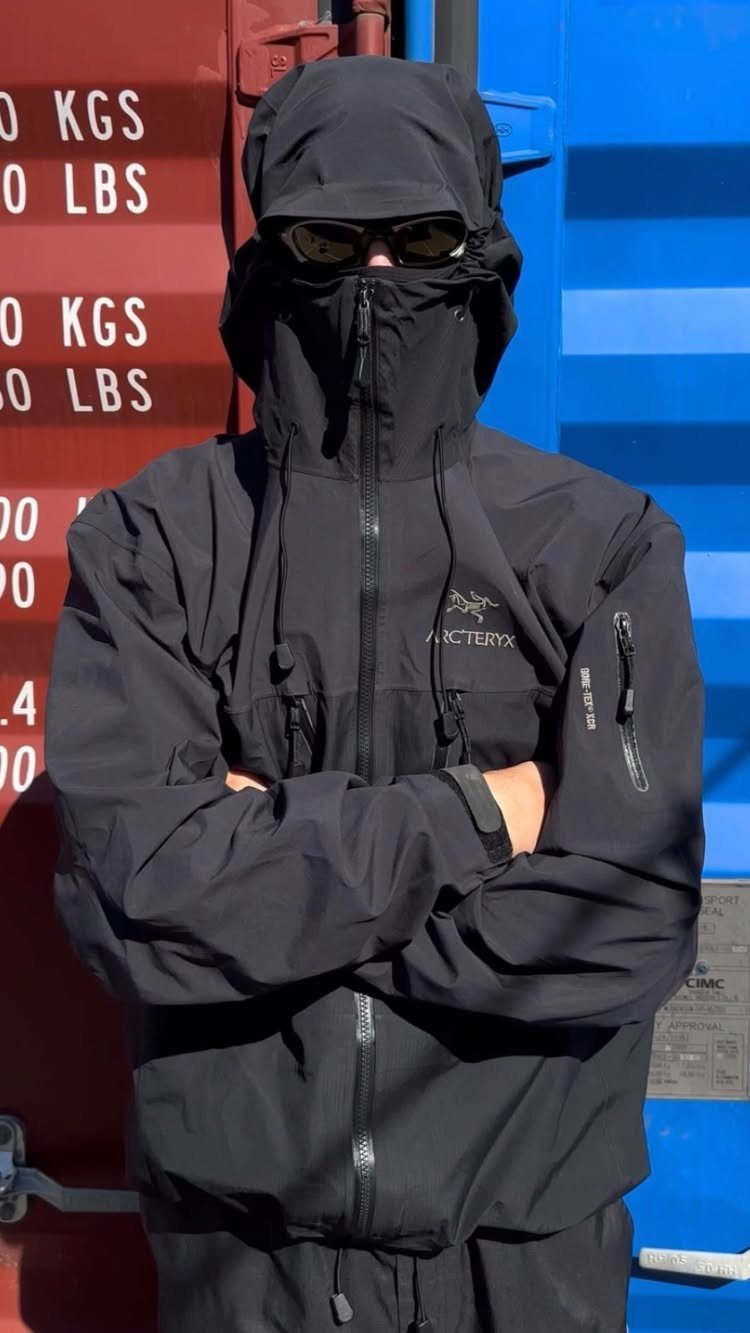
A black hooded technical jacket, zipped to the chin, does a lot with almost nothing. Add dark sunglasses and you have a look that reads as sharp and a little anonymous.
I would keep the rest of the outfit dark and plain, so the jacket’s technical shell and clean lines stay the focus. Arc’teryx is the name on the jacket here, and it is a clear example of the category.
Expect to pay more for this than for a regular hooded jacket.
6. Oversized Button-down Shirts
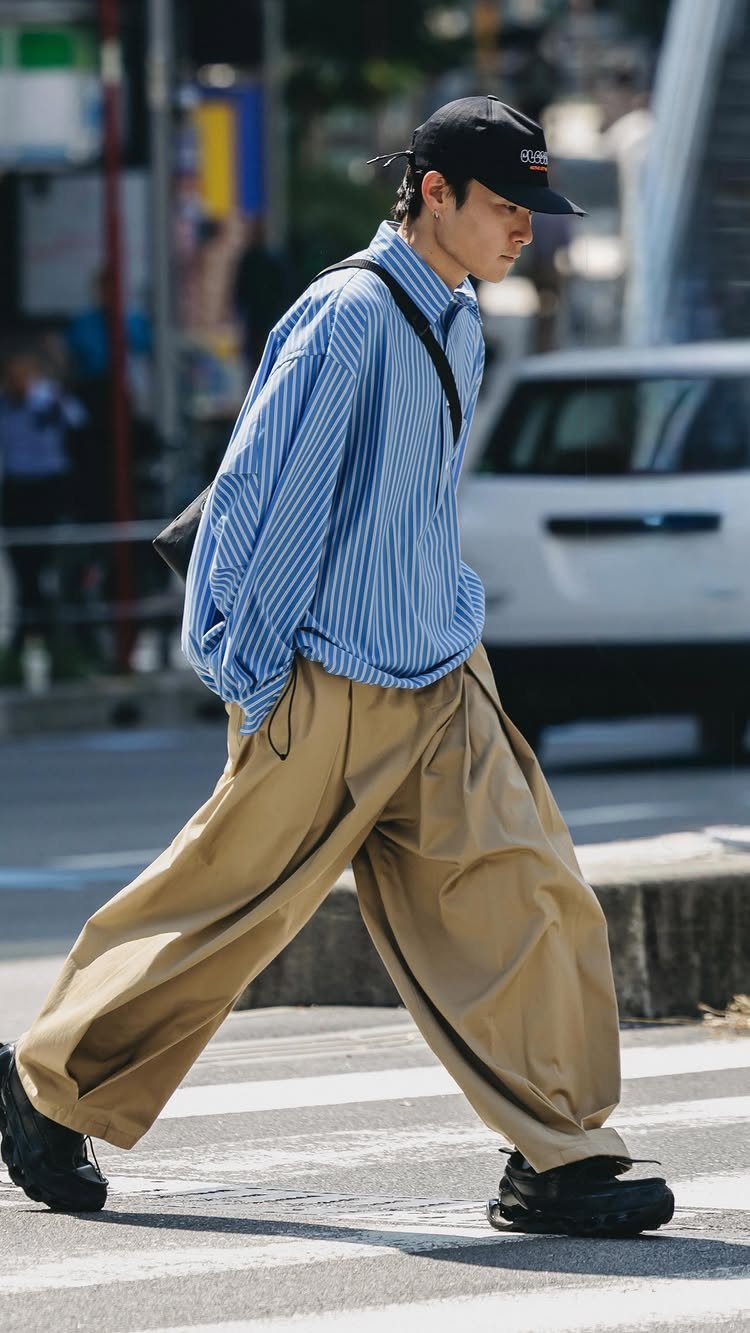
Wear the shirt untucked and let it hang, because that is where the breezy feel comes from. A blue-and-white striped button-up cut oversized looks relaxed over wide khaki trousers, with black sneakers and a black cap holding it together.
Stripes help an oversized shirt look intentional rather than borrowed. I would roll the sleeves once or twice if the cuffs swallow your hands.
It is an easy daytime outfit, and the loose cut stays comfortable when you are walking a lot.
7. Denim Jackets with Ties
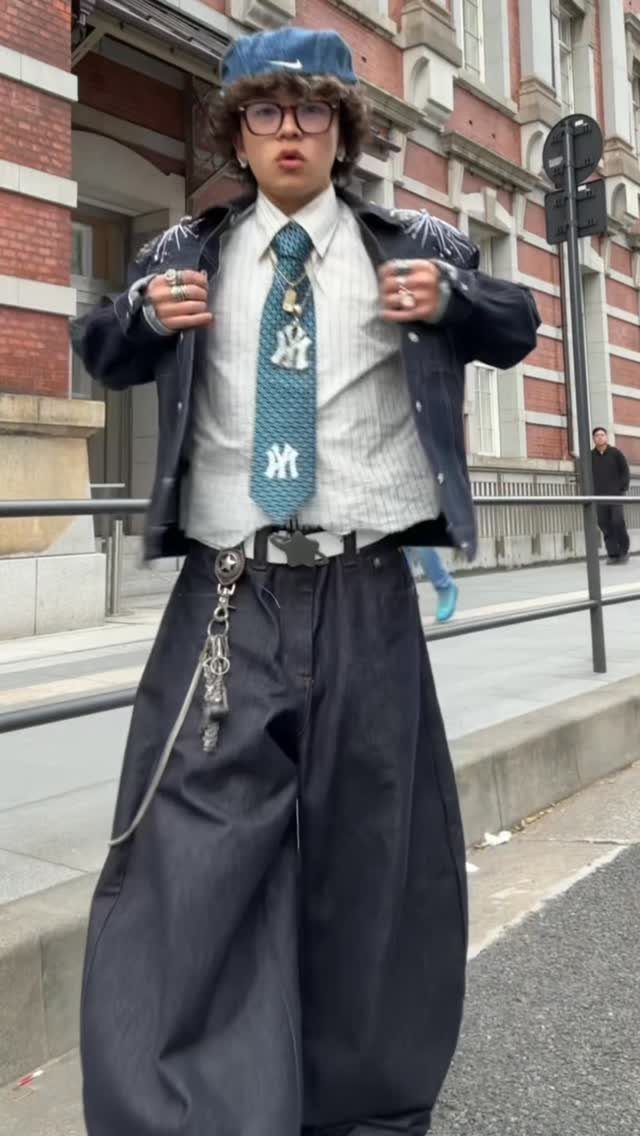
Put a tie on a denim jacket and the outfit stops reading as casual and starts reading as a joke you are in on.
An oversized jacket over a collared shirt, with the necktie left visible at the chest, is the formula. A denim cap finishes it.
I would keep the tie slim in the knot and loose in the collar, so it looks worn rather than pinned in place. Stay with one denim tone on top, and let the shirt and tie supply the contrast.
Expect a few odd looks on the first wear.
8. Layered Utility Vests
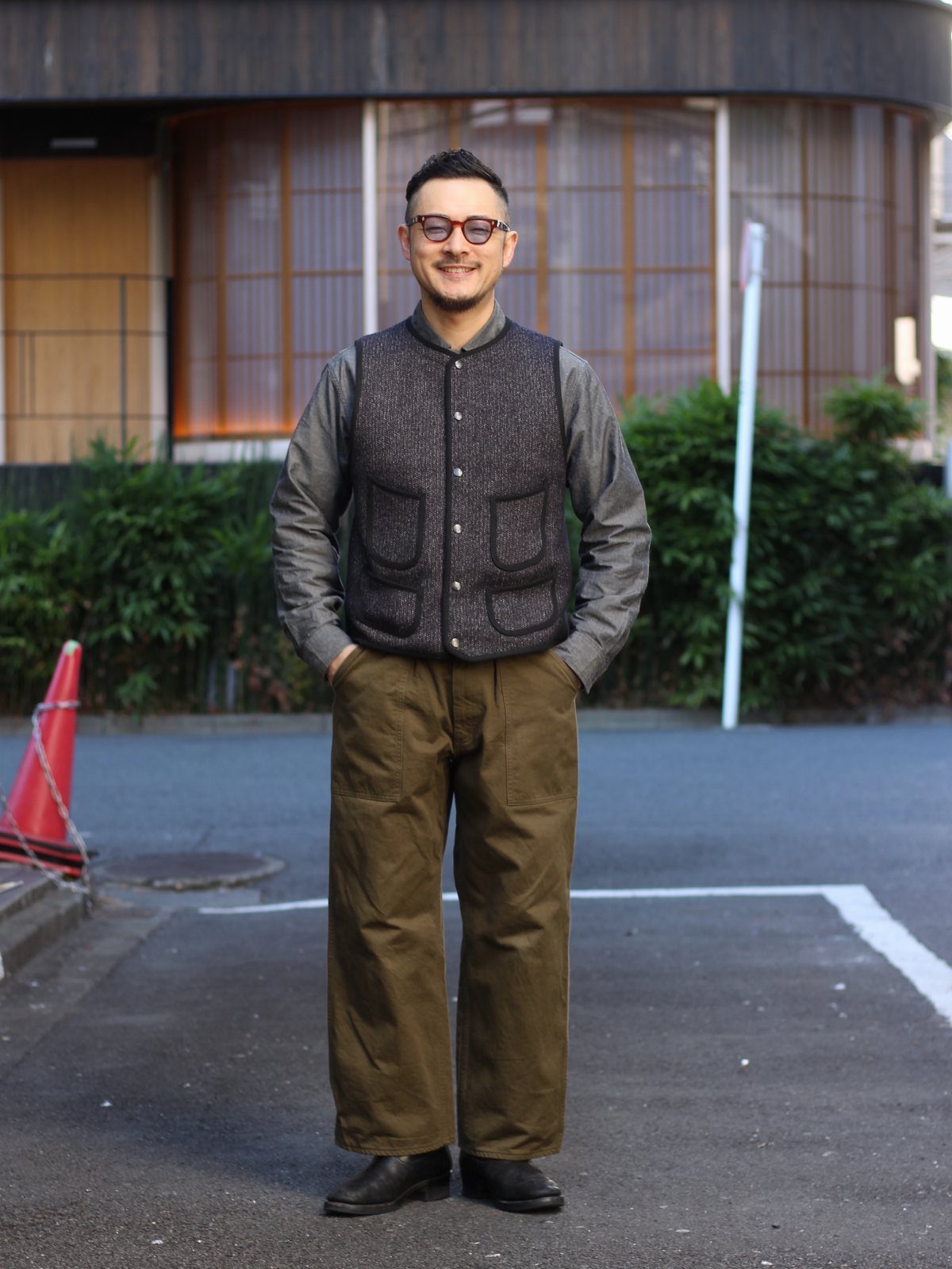
A textured dark vest over a grey button-up gives you a layer with real depth and almost no bulk. The shirt keeps the collar and sleeves clean, and the vest adds structure across the chest.
Relaxed trousers balance it. Wide olive legs with black boots keep the lower half calm, so the vest does the talking.
I would choose a vest with some surface texture over a flat one, because dark colors on dark colors need something to catch the light.
It works as an easy daytime outfit.
How to Wear Japanese Fashion
Pick one Japanese piece and build the rest of the outfit around it quietly. A single standout jacket or pair of trousers next to plain, muted basics looks balanced, while a full head-to-toe Japanese look starts to read as costume.
Take only the elements that match your personality and let them settle into clothes you already own. If a detail doesn’t fit how you live, skip it.
Judge a piece by how it works.
Pockets should sit where your hands and phone actually go, seams should look reinforced, and the fabric should be chosen for weather and wear. Fit matters too: a good cut leaves room for layers without restricting how you move.
Muted colors and straightforward shapes are what make this style look calm and intentional, and they let one purposeful detail carry the outfit.
Mistakes to Avoid
Stack several strong pieces without any logic and the outfit turns busy fast.
Go step by step.
Start with an oversized jacket, then try Japanese denim, and only after that move on to bolder pieces. Each new item should have a clear job before you add the next.
Quality is the other trap. I would rather own two well-made pieces than six knockoffs, because the fabric and construction are what you are actually paying for.
Influence on Global Fashion
By the early 1980s, designers from Japan were already changing how Paris and New York thought about cut, drape and black clothing.
Yohji Yamamoto and Comme des Garçons brought a minimalist, dark, deconstructed look that still shapes menswear, and major fashion houses keep drawing on their work.
The influence reaches past luxury, too. Oversized shapes, bold graphics and stacked layers from Japanese streetwear now show up in urban wardrobes all over the world.
That history is useful when you shop. Plenty of what looks new in your local store traces back to these ideas, so go to the source for the best version: dark palettes, loose shapes and layers that look intentional.
Frequently Asked Questions
What are some popular fashion styles in Tokyo?
Tokyo runs from quiet minimalism to loud, eccentric streetwear, and the loudest end centers on Harajuku.
There, layered colorful clothing, bold accessories and manga or punk influences are normal. Some of the most recognized streetwear labels, A Bathing Ape and Neighborhood among them, came out of that scene.
What are the top Japanese clothing brands?
A Bathing Ape, Comme des Garçons and Uniqlo are the names that come up most.
What are some traditional Japanese clothes for men?
The kimono, hakama and jinbei are the best-known traditional garments.
Older work and ceremonial pieces include the momohiki and samue for labor, and the montsuki, a crested garment kept for solemn occasions. Footwear such as waraji and geta rounded out daily dress.
How do I wear Japanese street fashion without looking like a costume?
Pick one Japanese piece, such as a standout jacket or a pair of wide trousers, and build the rest from plain, muted basics.
Wear the look from head to toe and it stops reading as style and starts reading as a costume. Keeping to muted colors and simple shapes lets that single piece carry the outfit.
What should I look for when buying Japanese-style clothing?
Judge a piece by how it works. The cut should leave room for layers without restricting movement, and two well-made pieces beat six knockoffs because you are paying for fabric and construction.